	---
title: Canada
type: taxonomy_archive
taxonomy: country
slug: canada
term_id: 140
permalink: "https://worldcitiescultureforum.com/country/canada/"
post_count: 21
---

# Canada

Posts in this archive: 21

- [A Voice for Youth in Montréal](https://worldcitiescultureforum.com/wp-content/uploads/wp-mfa-exports/city-project/montreal-youth-participation-in-cultural-policy.md) — Montréal is embedding youth perspectives into cultural policymaking through two initiatives: 'A Library That Looks Like Me' and the 'Manifesto of Montréal Youth for the Arts and Culture'. These programmes invite children and teens to co-design library services and contribute ideas to cultural policy. By giving young people a stronger voice, the city is fostering inclusive participation and ensuring that cultural strategies reflect the needs and aspirations of the next generation.
- [Chinatown: How Montréal is safeguarding this historic cultural district ](https://worldcitiescultureforum.com/wp-content/uploads/wp-mfa-exports/city-project/montreal-chinatown-heritage-preservation.md) — Like many Chinatowns in cities, Montreal’s Chinatown – the only French-speaking Chinatown in the Americas – faces pressures from gentrification and redevelopment. Since 2019, the City of Montreal has implemented a coordinated strategy to preserve the neighbourhood’s culture and reflect a broader North American trend of protecting ethnic enclaves from displacement through inclusive urban planning and community-led preservation.
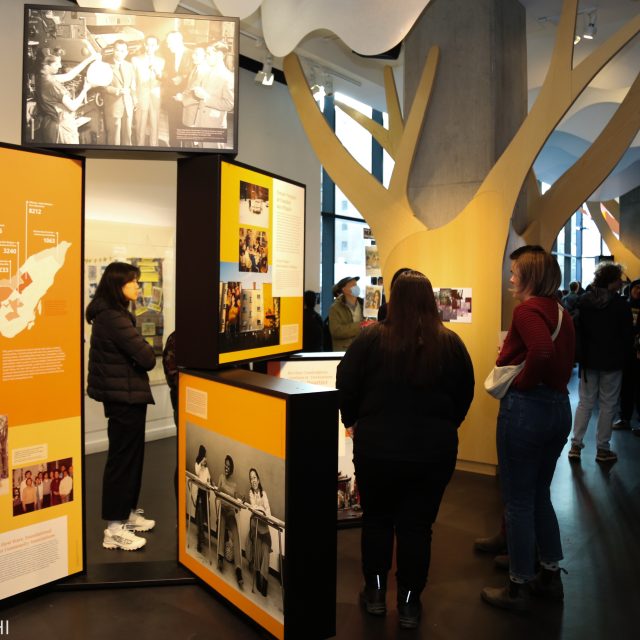
- [Museum Expansion: How Montréal tripled its city museum size, team and programming co-created by citizens](https://worldcitiescultureforum.com/wp-content/uploads/wp-mfa-exports/city-project/museum-expansion-how-montreal-tripled-its-city-museum-size-team-and-programming-100-co-created-by-citizens.md) — Between 2019 and 2024, Montreal transformed its city museum into MEM – Centre des mémoires montréalaises. Now located in the Quartier des spectacles, MEM tripled in size and was co-designed with over 75 citizens through a participatory planning process. With exhibitions co-created by community groups and inclusive governance at its core, MEM redefines the city museum as a civic space rooted in memory, diversity, and belonging.
- [Catalyst and Transformation Fund: How Toronto supported arts and culture organisations to restructure and recover after the pandemic](https://worldcitiescultureforum.com/wp-content/uploads/wp-mfa-exports/city-project/torontos-catalyst-and-transformation-fund.md) — Launched in response to growing precarity in the cultural sector, Toronto’s Catalyst and Transformation (CAT) Fund helps arts and culture organizations reimagine their futures and business models. Delivered by Work In Culture, the fund supports strategic risk-taking, from shared governance models to thoughtful wind-downs, prioritising equity, sustainability, and collaboration. By offering anonymity and structural support, CAT has empowered organisations across the sector to embrace meaningful, long-deferred change and reshape their role in community life.
- [Cultural Strategy: Toronto’s Culture Connects 2025-2035 plan](https://worldcitiescultureforum.com/wp-content/uploads/wp-mfa-exports/city-project/torontos-culture-connects-2025-2035-strategy.md) — In 2024, the City of Toronto launched Culture Connects: An Action Plan for Culture (2025–2035) to redefine how culture is supported, experienced, and valued across the city. Developed in response to significant shifts in Toronto’s social and cultural landscape, the plan sets out a 10-year vision to ensure that everyone in Toronto has the opportunity to create, engage with, and feel a sense of belonging in the city’s cultural life.
- [How Toronto responded to the insolvency of Toronto Artscape Inc.](https://worldcitiescultureforum.com/wp-content/uploads/wp-mfa-exports/city-project/toronto-artscape-insolvency-response.md) — In 2023, the collapse of non-profit developer Artscape threatened 14 affordable cultural properties and nearly 400 tenancies. The City of Toronto responded with swift legal, operational, and financial action - securing a court ruling to protect 91% of tenancies from sale and providing emergency property management. Working with community partners, the City mobilised to save the remaining 9% of tenancies, enabling tenant-led ownership of key sites and backing Canada’s first cultural land trust. The intervention preserved critical infrastructure and created a new model for cultural resilience.
- [Making space for arts and culture: Vancouver leads the way in arts ownership](https://worldcitiescultureforum.com/wp-content/uploads/wp-mfa-exports/city-project/expand-planning-tools-reduce-regulatory-barriers.md) — The purpose of the Community Amenity Contribution (CAC) policies is to prioritise the development of arts and culture spaces in city-building. The primary goal is to create more opportunities for community ownership, fostering a vibrant arts and culture scene within the city.
- [Cultural identity at risk: the challenge facing Vancouver's historic Chinatown](https://worldcitiescultureforum.com/wp-content/uploads/wp-mfa-exports/city-project/prioritize-intangible-cultural-heritage-promote-cultural-redress.md) — Conditionally approved by Council in 2022, Vancouver proposed priority projects, actions, partners, policy work, and resources to foster a
vibrant Chinatown, and provide a foundational document towards a potential UNESCO World Heritage Site designation for the area.
- [Vancouver's creative resistance: how the city is fighting artistic displacement](https://worldcitiescultureforum.com/wp-content/uploads/wp-mfa-exports/city-project/implement-cultural-space-targets.md) — Making Space for Arts and Culture set out a 10-year target to secure 650,000 sq. ft. of new arts
and cultural space to address the alarming rate of displacement faced by the sector.
- [Is collaborative grantmaking the key to equitable funding in Vancouver?](https://worldcitiescultureforum.com/wp-content/uploads/wp-mfa-exports/city-project/advance-equitable-accessible-funding-leadership-organizational-practices.md) — The Grants and Awards team piloted a dedicated Cultural Equity Grants program, an invitation based, noncompetitive process for multi-year grants to support greater equity for the arts and culture sector.
- [Montréal's hyperlocal cultural policy keeps an eye on the big picture](https://worldcitiescultureforum.com/wp-content/uploads/wp-mfa-exports/city-project/cultural-neighbourhoods.md)
- [​How Montréal's department of culture tackled pandemic isolation](https://worldcitiescultureforum.com/wp-content/uploads/wp-mfa-exports/city-project/nos-maisons-our-homes.md) — Montréal's Department of Culture wanted to find a safe and creative way to bring citizens together and create spaces for collaboration and resource exchange between local government, artists and arts organizations, and the City's population who were confined to their homes.
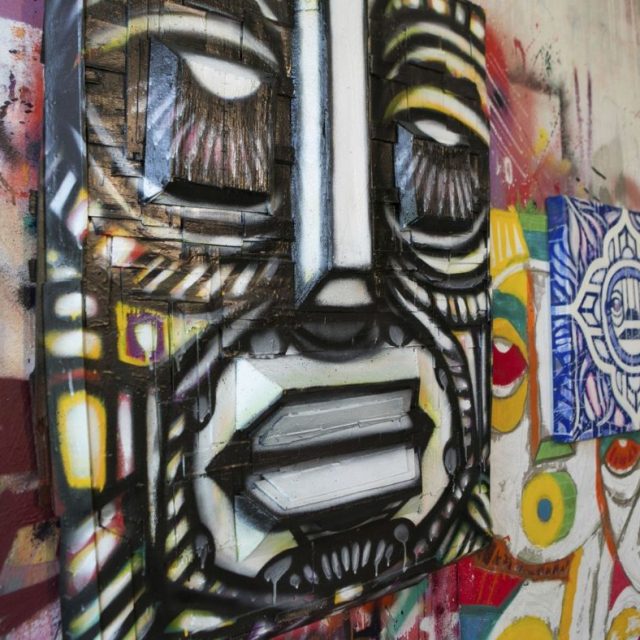
- [Public art with purpose: Toronto's art strategy takes inclusivity to the streets](https://worldcitiescultureforum.com/wp-content/uploads/wp-mfa-exports/city-project/toronto-public-art-strategy.md) — Toronto has more than 1,500 works of public art, which have been integral to community development, civic engagement, and urban design. Yet, despite the strengths of the collection, issues exist with gaps in representation, geographic distribution of the works, and its accessibility to the public, including the need for better interpretation.
- [Toronto's pandemic response: transforming crisis into creative opportunities](https://worldcitiescultureforum.com/wp-content/uploads/wp-mfa-exports/city-project/toronto-covid-19-recovery.md) — The cultural sector was one of the hardest hit by Covid-19 restrictions, and one of the last to recover. Initially, the City acted quickly to support the sector with funds and rapid policy responses. In the aftermath, it worked to address structural challenges that the sector was facing long before the pandemic, helping it to flourish in the future.
- [TRENDS](https://worldcitiescultureforum.com/wp-content/uploads/wp-mfa-exports/city/trends.md) — Over the past decade the City has increased its spend on arts and cultural grants – rising by 73% between 2012 and 2018. In the post-pandemic period it is again rethinking its grants structures, to support artists from demographics less represented in the sector.
- [INFRASTRUCTURE](https://worldcitiescultureforum.com/wp-content/uploads/wp-mfa-exports/city/infrastructure.md) — A new Waterfront Public Art Trail is being planned in Toronto’s transformed Port Lands, thanks to a $25 million donation from the Pierre Lassonde Family Foundation.
- [Toronto's monumental shift: Dundas Street renaming sparks global conversation](https://worldcitiescultureforum.com/wp-content/uploads/wp-mfa-exports/city-project/renaming-dundas-street.md) — Reconsidering statues and street names in the public realm and ensuring that the most impacted community voices are heard.
- [Cultural players help shape Montréal's game-changing equity index](https://worldcitiescultureforum.com/wp-content/uploads/wp-mfa-exports/city-project/indice-dequite-ide-diversity-and-equity-index-tool.md) — A comprehensive review of diversity in Montreal's cultural organisations and festivals, to create a tool that provides an accurate understanding of diversity, equity and inclusion efforts by cultural organisations.
- [Montréal](https://worldcitiescultureforum.com/wp-content/uploads/wp-mfa-exports/city/montreal.md) — At the heart of the city's cultural offerings lies the Quartier des Spectacles cultural district.  It houses 85 institutional and cultural partners, including performance venues, museums, galleries, cinemas, and cultural centres, along with a series of outdoor public spaces. This area supports 450 cultural businesses and over 7,000 creative workers.
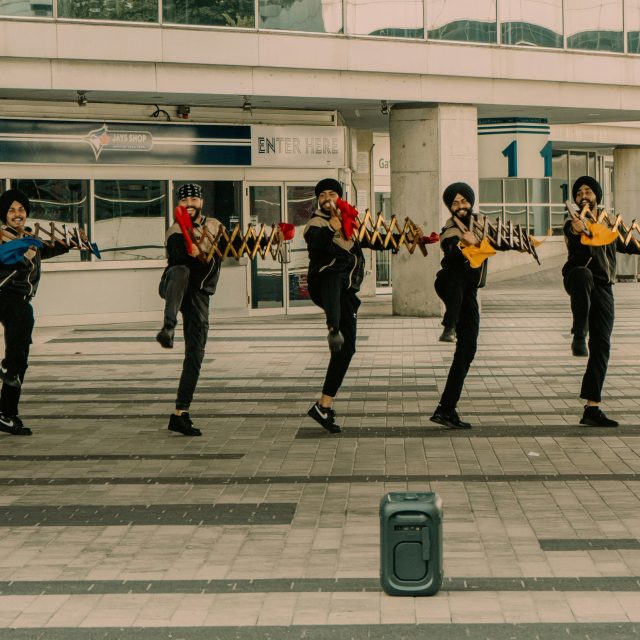
- [Toronto](https://worldcitiescultureforum.com/wp-content/uploads/wp-mfa-exports/city/toronto.md) — Toronto is renowned worldwide as a centre for film, television, and digital media, contributing a record-breaking CAD $2.5 billion to the city's economy in 2021. Its festivals, including the Toronto Caribbean Carnival, Pride Toronto, and the Toronto International Film Festival, are among the most celebrated globally. The city is also home to the largest number of artists in Canada, representing approximately one in six artists nationwide.
- [Vancouver](https://worldcitiescultureforum.com/wp-content/uploads/wp-mfa-exports/city/vancouver.md) — Vancouver, established in 1886, is a young city evolving into a dynamic, prosperous, and rapidly growing region. The city has become a hub for film production, earning it the moniker of a second Hollywood. As the economic and cultural center of the region, Vancouver is anticipated to grow significantly by 2050. The city's role in job creation, housing, and immigration is pivotal, with careful consideration needed to manage growth sustainably and preserve its unique character.