




Leadership Exchange Programme – Round Three
Throughout 2026, city and cultural leaders from 23 cities across Asia, Latin and North America, and Europe have been visiting each other’s cities to study what works on the ground, from placing culture at the heart of the Night Time Economy to how culture can drive the Silver Economy and resilient ageing.
The Leadership Exchange Programme fast-tracks change in cities as they replicate, adapt and scale policies with a proven track record of success. Study visits give leaders first-hand insight and observation, before returning home with practical ideas and learnings ready to implement. The programme continues to be supported by Bloomberg Philanthropies.
Here’s what the Round Three exchanges have uncovered so far.
EXCHANGE 1: How to rethink commemoration in urban spaces
Cities: Amsterdam, London, New York, Kyiv and Warsaw, with Vilnius as observer
Hosted by Warsaw · April 2026
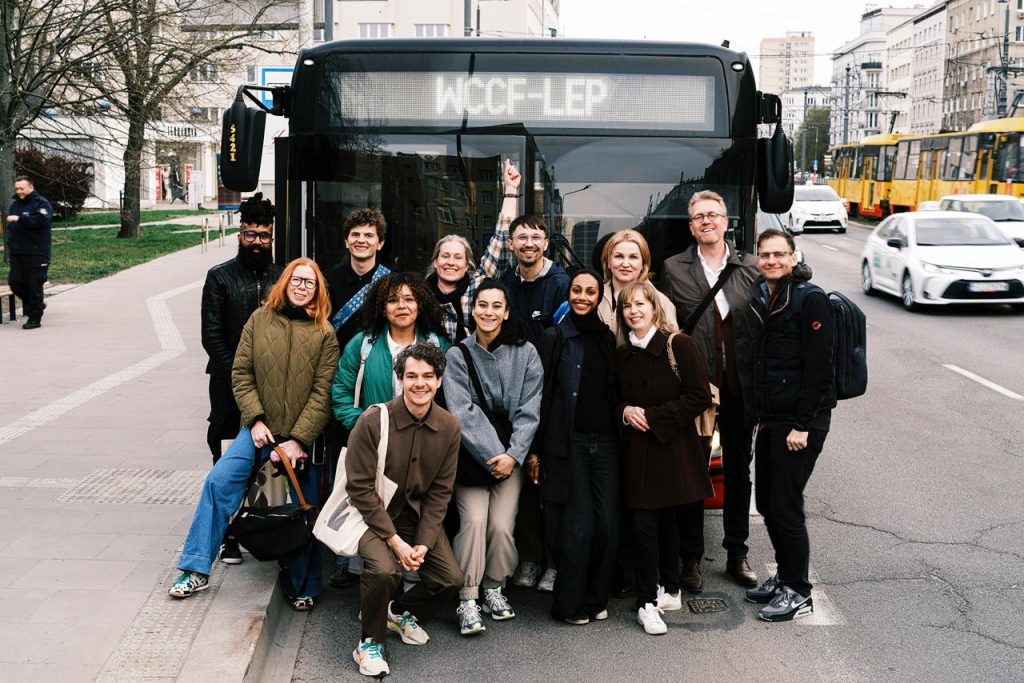
Warsaw, a city whose memory lives in its monuments, street names and reconstructed fabric, hosted this exchange in April 2026. Through panels, city tours and workshops, participants compared how they handle war memory, imperial and colonial legacies, public art and the representation of communities left out of official history.
Five key takeaways
- Fix coordination, not just ownership. Commemoration is usually spread across heritage departments, art commissions, planners and elected bodies. What helps is shared criteria, clear decision routes and a regular cycle: review who is commemorated, set criteria for who is missing, act, evaluate and repeat.
- Measure who is visible. Almost all cities assess proposals for representation, yet none can fully track whose histories appear in public space. London’s Commission for Diversity in the Public Realm and The Wake at West India Quay show what targeted action can achieve.
- Pilot before going permanent. Temporary works keep memory open to dialogue. Kyiv favours temporary installations such as Perelom over filling a city at war with permanent symbols. Participants recommended “sandboxes” like Philadelphia’s Monument Lab, with a lighter approval process.
- Treat memory as a practice. Warsaw’s W Hour stops the city for a minute every 1 August, and the Powązki Cemetery collection, running since 1975, joined Poland’s National List of Intangible Cultural Heritage in 2024.
- Build trust before decisions. Publish the steps, criteria and decision-makers, and be clear about budget and constraints. Favour small conversations over town halls, avoid political deadlines, and look for the need behind a request for a statue. New York’s Percent for Art programme, which sets aside 1% of capital budgets for art, builds community engagement into every stage.
“We are not dealing with monuments but with what is happening around the monuments. We are not dealing with objects but with what people do with the objects.” Prof. Hanna Schreiber (Leadership Exchange Participant)
The full exchange publication will be available soon.
EXCHANGE 2: How to co-create public art
Cities: Jakarta and Milan
May / July 2026

Jakarta’s delegation spent four days in Milan in May, and Milan’s team returned the visit in July. In Milan, the Jakarta team saw participatory murals in the San Siro social housing district, the Art Line contemporary art park and the Milano Memoria programme. In Jakarta, the Milan delegation saw Betawi welcome rituals, community film, art collectives, museums and the Thousand Islands. Both cities, despite their differences share a commitment to bottom-up approaches to delivering public art that a reflective of the diverse communities they represent. Both cities explored ways to cultivate civic pride through co-creation and ways to translate this through institutions and public spaces.
Five key takeaways
- Political will comes first. Milan’s participatory programmes exist because elected leaders actively back them. Senior support was visible on both sides, with Jakarta’s Deputy Governor taking part in both cities.
- Build dedicated structures. Milan has a standalone Public Art Office led by curators from the art world. Its process is clear: agree the site with other departments, issue an open call for a community curator, work with residents, select the artist and create the work together. Jakarta has no equivalent office, but its independent Arts Council (DKJ), founded in 1968, shows how a city can bridge government and artists.
- Coordinate what already exists. Participatory art is already common practice among Jakarta’s artists, from ruangrupa’s lumbung method of pooling resources to murals made with residents. It mostly runs at small scale with limited resources. Titik Temu (“Meeting Point”), where residents choose what to work on, shows what city coordination can unlock, and that no single model fits every neighbourhood.
- Treat memory as a civic resource. Milano Memoria collects residents’ stories and turns them into neighbourhood plaques and murals such as the Mural of the Rebel Mayors, placing local history alongside official history. Jakarta has rich equivalents, such as the story of Camat Gabun in Lenteng Agung, that could be celebrated in public space.
“We do not need people to come here with large amounts of money. What we need are friends who come and show us that, with our own abilities and resources, we can make change happen.” – Ibu Hajah Mahariah, Coordinator, Titik Temu, Pulau Panggang
EXCHANGE 3: How to support the creative economy workforce
Cities: Boston and São Paulo
May/September 2026
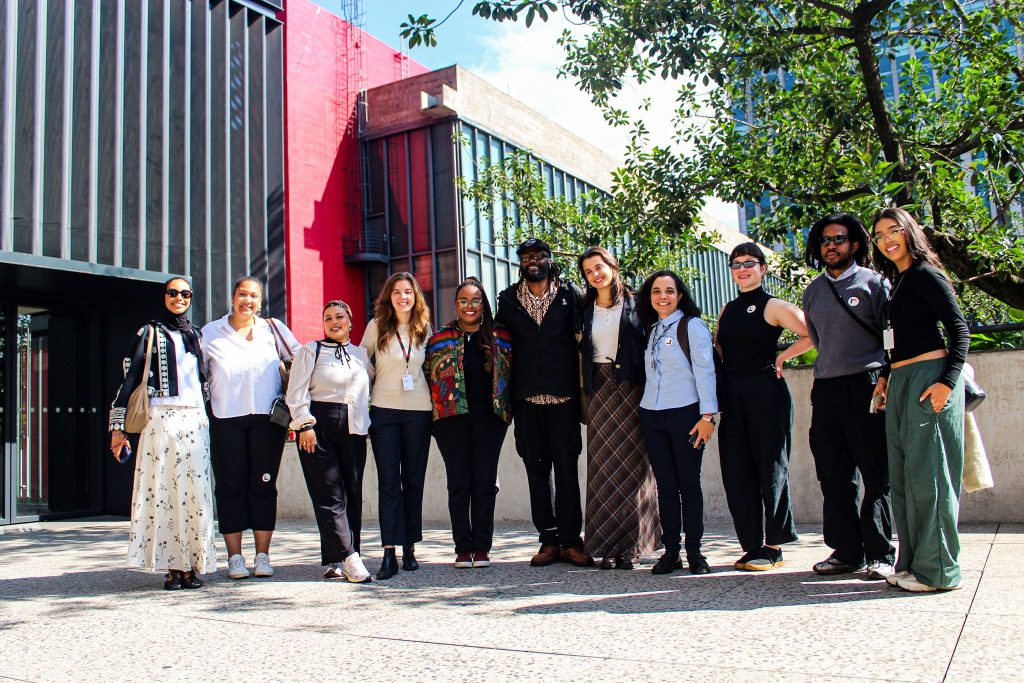
Boston and Sao Paulo share a growing but volatile creative economy, driven by freelancers, micro-businesses and an increasingly AI-shaped landscape. Against a backdrop of youth unemployment and rapid technological change, this two-way exchange between Boston’s Mayor’s Office of Arts and Culture and the City of Sao Paulo explores the policies, spaces and social infrastructure needed to support the next generation of creative workers.
At its core is a shared question: how can cities preserve what makes them unique while ensuring that emerging talent can access opportunities, build sustainable careers and contribute to a thriving creative economy?
| 3% / 6% of global GDP and global employment from the creative industries (UN estimate) | 3,200+ projects funded by São Paulo’s VAI programme in over 20 years | 50% of Boston’s creative industries are enabled by technology |
Five key takeaways
- Make the pathways visible. There are many routes into creative careers, and cities need to make them visible to young people. At Boston Arts Academy, students gain experience beyond the studio, such as running the lighting for school shows, and the ICA’s teen programmes connect young people with contemporary art.
- Invest in hands-on facilities. MassArt’s fabrication and printmaking workshops show how access to equipment supports both learning and creative production.
- Shape who participates, not just who benefits. São Paulo’s VAI grant programme funds cultural projects by low-income young people and collectives in peripheral neighbourhoods. The city committed $146.4 million to culture and the creative economy in 2025.
- Put vacant space to creative use. Boston is turning downtown offices and shops left empty since the pandemic into affordable studios, recording spaces, venues and galleries, inspired by London’s Creative Enterprise Zones.
- Link skills to growth and equity. Closer ties between universities, skills providers and creative businesses help workers keep pace with digital change, and both cities treat the creative economy as a tool for inclusion, not growth alone.
Read more: How can cities future-proof the creative economy?
EXCHANGE 4: How to develop the silver economy
Cities: Guangzhou and London
Hosted by Guangzhou · June 2026

London 24 Hour London team and International Longevity Centre visited Guangzhou to explore how cultural and social participation can support healthier, happier ageing around the clock. The biggest lesson was a reframe: what if cities stopped seeing ageing as a problem to be managed and treated it as a resource to be activated?
| 2× growth in the world’s urban population aged 65+ projected by 2050 | 91 master studios at Liwan District’s Intangible Cultural Heritage Centre |
Five key takeaways
- Heritage for the future. Older tradition bearers can shape a district’s modern identity. In Liwan District, senior inheritors of intangible culture were central to regeneration, alongside a busy night-time economy.
- Participation, not just care. Older people’s experience can become purpose and economic activity. Guangzhou’s Xingfu Centre and Xingfu Club work with the Guangzhou Institute for Senior Development on senior talent and “productive ageing”. Cities can start by mapping the skills and heritage knowledge older residents hold.
- Intergenerational exchange by design. Mentoring schemes in Guangzhou pair retired professionals with younger people, countering ageism and age-segregated cities.
- Culture as health infrastructure. Music, dance, craft, performance and lifelong learning support physical and mental health, and should count as part of a city’s social and health infrastructure.
- A 24-hour city for all ages. Evening activity that brings people together helps tackle loneliness, so older audiences belong in night-time culture strategies.
EXCHANGE 5: How to pedestrianise the high street
Cities: Barcelona and London
October 2026
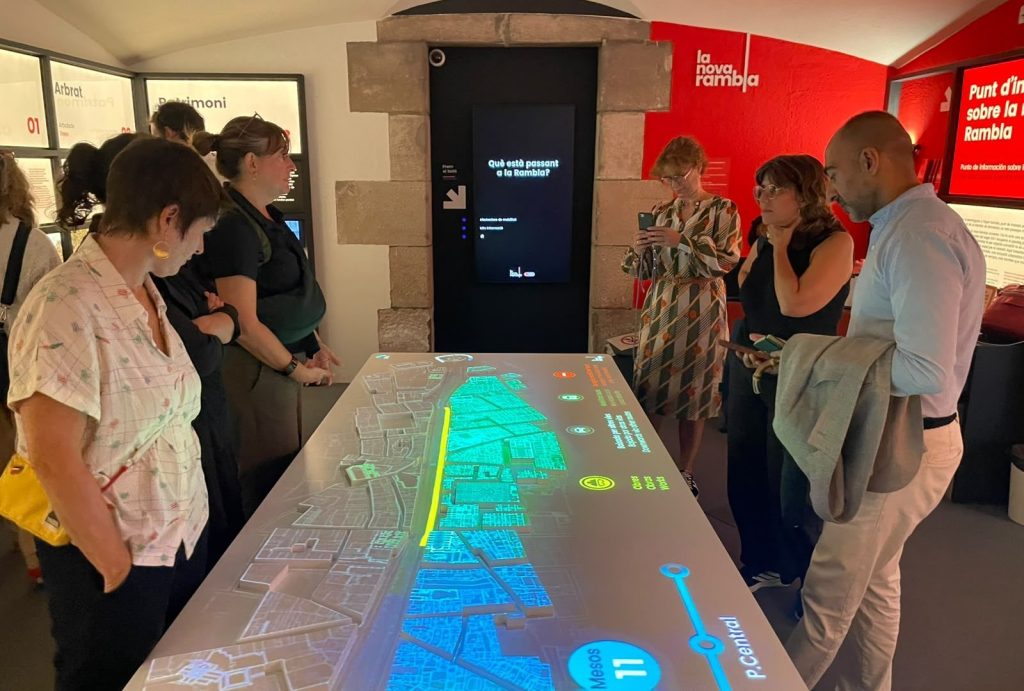
Two cities, two iconic streets, and one shared question: how can high streets work better for people, culture and everyday urban life? In October, London’s Oxford Street Development Corporation met Barcelona’s chief architect and city leaders to swap ideas on public space, mobility, culture, heritage, commerce and citizen participation. Framed around the both city’s leading high streets, delegates explore how to balance the competing needs and priorities of stakeholders in these spaces.
| ~1 km of Oxford Street going traffic-free, from Orchard Street to Great Portland Street from 26 October 2026 | €55m investment in the redesign of La Rambla | 67% of shops matched or beat typical Sunday sales on Oxford Street’s September 2025 car-free day |
City insights
- London is starting with a light-touch, temporary first phase. Feedback from residents, accessibility groups, businesses and workers will shape a transitional scheme by spring 2027 and then the permanent design.
- London’s car-free day showed that pedestrianisation can support trade, leisure and cultural use.
- Barcelona has already worked through the political, logistical and stakeholder challenges of transforming La Rambla, helping London anticipate its own.
- Barcelona’s Superblocks have been linked to a 25% drop in nitrogen dioxide where cars were removed, making clean air part of the case.
Key insights from the exchange will follow. For more context, read Cities Step Forward: How Pedestrianisation is Powering Culture in the Streets.
EXCHANGE 6: How to build a resilient night-time economy
Cities: Amsterdam, Cologne, Guangzhou, London, San Francisco, Stockholm and Toronto (in person); Edinburgh and Buenos Aires (online participation)
October 2026
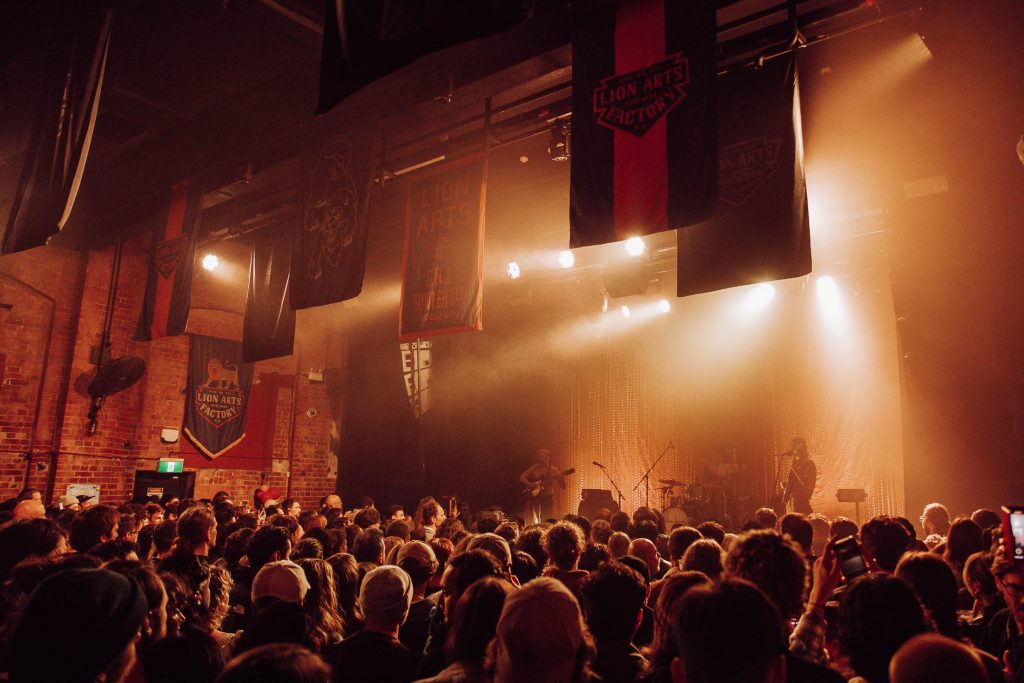
This exchange brings together seven cities with very different nights, from Guangzhou’s family-friendly night markets to San Francisco’s independent venues and LGBTQ+ nightlife. They face shared pressures: rising costs and rents, competition for space, changing consumer habits and demographic patterns, complex licensing, and the need to balance a lively night with noise, safety and residents’ needs. Cities are looking to take home better models for representing the night-time sector and working across departments, ways to protect venues through planning (including Agent of Change principles), and ideas for temporary spaces and pilot cultural zones.
| 3.67bn visits to Guangzhou’s 15 government-supported night-time zones in 2025 | 23 recommendations across 10 areas from the London Nightlife Taskforce | 25+ yrs of night-time governance in San Francisco |
City insights
- Amsterdam was the first Dutch city with a formal Night Vision (2021). It funds and regulates its night scene with a night mayor and night council.
- Cologne uses planning to protect music clubs from housing development and mediates noise conflicts around outdoor events.
- Guangzhou takes an intergenerational approach, opening museums, historic neighbourhoods and festivals after dark for families, older people and tourists as well as the young.
- London is reforming licensing and governance through new strategic licensing powers for the Mayor and a proposed independent Nightlife Commission.
- San Francisco supports nightlife through its Entertainment Commission, and its social safety toolkit is seen as exemplary.
- Stockholm’s Culture Pilots have helped hundreds of organisations since 2016 turn former industrial, office and retail buildings into venues.
- Toronto treats 6pm to 6am as its night economy and brings residents, businesses, gig workers, unions and venues into policy-making through its External Night Economy Working Group.
EXCHANGE 7: How to grow a successful film city
Cities: Chicago, London, Los Angeles (City and County), Montréal, New York, Toronto and Vancouver
Online series 2026
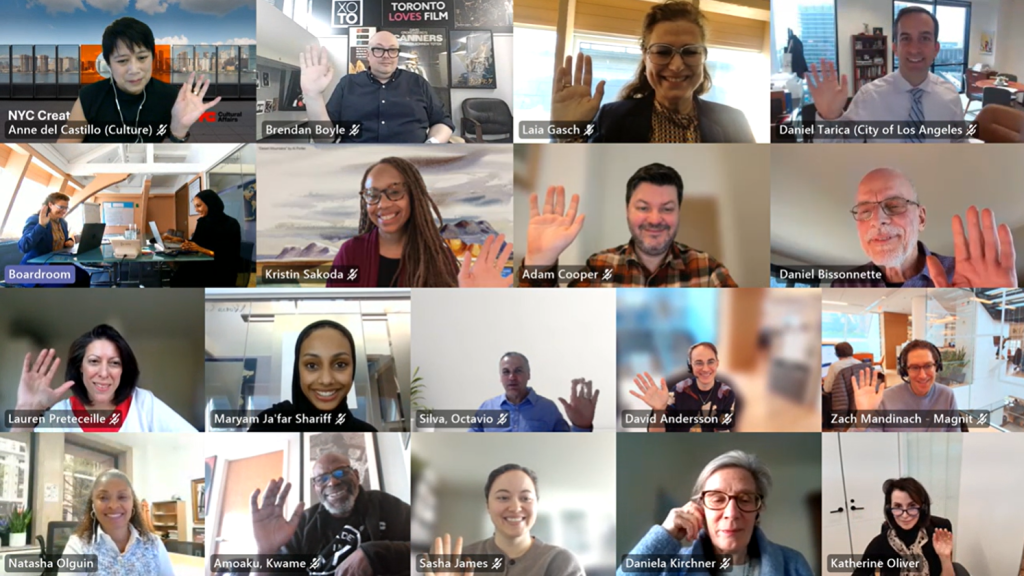
From writers’ strikes to emerging technologies and growing global competition, this exchange explores how major film cities can collaborate and build resilience against shared industry challenges. Across four online roundtables, film offices compared how they attract and sustain production. Their governance models differ, from city departments in Chicago and Toronto to a mayoral agency in New York and Film London, but their challenges and opportunities are strikingly similar: multi-agency permitting. This online exchange explored innovative solutions and approaches toto runaway production, rising costs, workfroce development and diveristy, the threat of AI and economic impact and casemaking.
| 185,000 jobs supported by New York’s film and TV industry, generating $81.6bn in economic output | $703m record film industry spending in Illinois, supporting an estimated 18,000 jobs | C$2.5bn+ annual film and TV production spending in Toronto |
Key takeaways:
- Empower the film office. Give it a clear political mandate to convene agencies and resolve conflicts between them, rather than act as a permitting desk, as New York and Toronto have done. Build “an ally in every department” through direct relationships and regular cross-agency meetings.
- Plan for the long term. A multi-year film strategy approved at city council level, covering workforce, infrastructure, competitiveness and sustainability, gives the sector stability. Toronto’s recent strategy is a model.
- Keep the crew rolling. The issue is less a shortage of workers than inconsistent work and the loss of experience as veterans retire. Cities can treat film work as a portfolio career, fund paid entry routes and mentoring, and support decent pay, building on schemes such as New York’s Production Assistant Training Program, Toronto and Chicago’s Youth in Focus, and London’s Equal Access Network.
- Show the numbers. Productions are increasingly reluctant to share spend data. Cities can use reliable proxies, such as a share of state or national spend, publish a regular impact report for elected officials, and keep industry and resident communications separate.
- Green set, fair deal. Link sustainability to incentives, such as an extra tax-credit percentage for productions with an approved sustainability plan, and set targets like phasing out diesel generators. Support smaller productions and independent cinemas, and publish clear guidelines on AI and the use of residents’ data.