Cultural Policy in Montréal
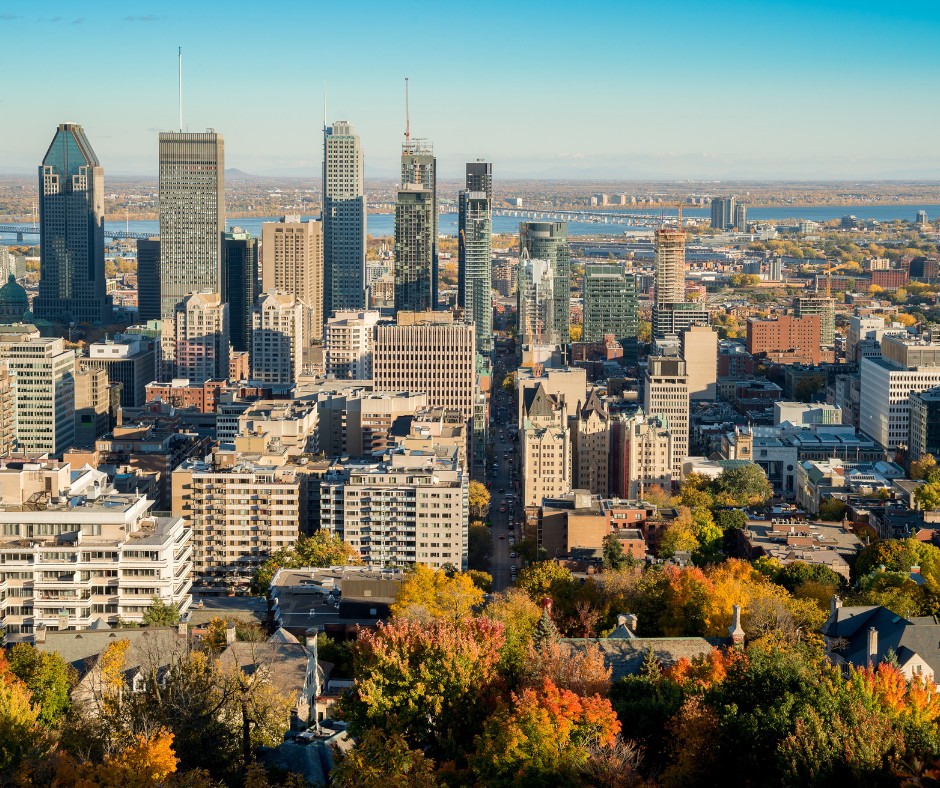
Montréal is the largest city in Québec, home to over two million residents and more than 120 different ethnic communities

Cultural policy
Cultural policy in the city is managed by the City of Montréal. The City of Montréal’s new 2025-2030 cultural development policy chooses to place the citizen at the heart of municipal cultural action and invites us to rethink the way cultural actors and stakeholders interact and develop culture on the territory for the citizens. It is the result of numerous consultations that have led to the active participation of the public and the cultural sector. The reflections were oriented around three axes: arts and culture to improve the quality of life; arts and culture to help address the major climate, socio-demographic and economic challenges of today and tomorrow; as well as supporting the cultural ecosystem in the face of the new post-pandemic context.
Cultural programmes
In addition to Montreal’s Strategic Plan 2030, several new policies and programs have been put in place to promote French language, reconcile with the Indigenous Peoples, and envision a more sustainable and equitable future. This includes support to local Indigenous artists through a mural arts programme, creative residencies and the re-examination of public art and monuments in the city.
Indeed, Montréal has faced multiple challenges that have been more pronounced since the pandemic, including rising property values, gentrification, and inflation, which make it increasingly difficult for cultural organisations and artists to find spaces for living, creating, and performing. The COVID-19 pandemic has deeply impacted Montréal’s cultural sector workforce, leading to a shortage of specialised workers. Audiences’ development is another issue due to the decline in attendance and changes in the population’s consumption habits. The public financial support that was added during the covid has ceased; The organisations are therefore even more fragile. The cultural development policy aims to support the cultural sector, in particular by simplifying access to resources and funding. Also, the City of Montréal and the Québec government have invested $30 million in assistance for artist studios to address one of these challenges.
To address the post-pandemic challenges, Montréal is implementing various measures, such as the 2030 Downtown Strategy for a sustainable recovery of Québec’s economic and cultural heartland. This strategy is based on three major development priorities: highlighting the identity of neighbourhoods, focusing on a vibrant urban mix and creating green, pleasant and safe routes.
Cultural heritage and infrastructure
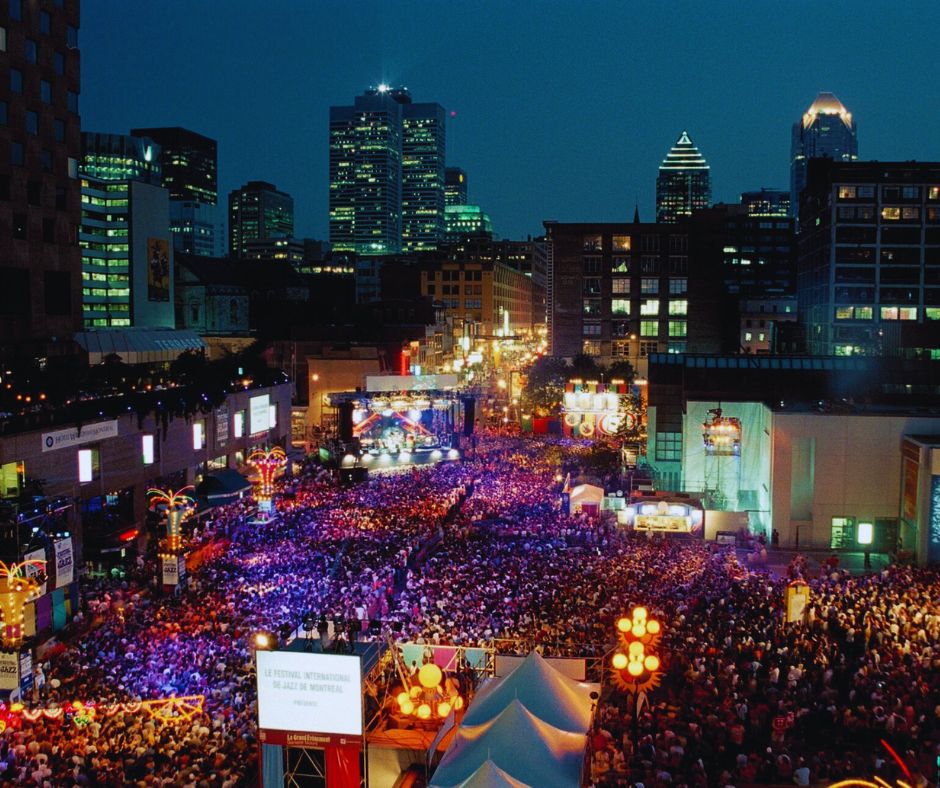
Montréal is renowned for its vibrant arts and culture scene. The city boasts a year-round cultural calendar filled with globally attended festivals and events. In winter, Montréal en lumière stands out as one of the world’s largest winter festivals, while summer features the Festival International de Jazz de Montréal and the Just for Laughs Comedy Festival, both drawing hundreds of thousands of visitors.
At the heart of the city’s cultural offerings lies the Quartier des Spectacles cultural district. Formerly Montréal’s red-light area, it now houses 80 institutional and cultural partners and 50 festivals, including performance venues, museums, galleries, cinemas, and cultural centres, along with a series of outdoor public spaces.
In addition to this central hub, Montréal is internationally recognised for its circus industry and community, with approximately 2,000 people passing through the Cité des Arts du Cirque daily, a hub dedicated to contemporary circus study and performance.
Community engagement, social impact and policy innovation
Montreal’s population is in the midst of a transformation. It is growing, aging, diversifying and facing new social, economic and climatic challenges that have a direct impact on land use planning, the services offered and the quality of life. The city must therefore adapt. Montréal is prioritising cultural development and investment at the neighbourhood level through its libraries and Maisons de la Culture networks, allowing better access to arts and culture and strengthening citizen participation. In the future years, investments are also planned to reduce inequities between neighbourhoods, based on a new equity index that has been put in place.
© Images Courtesy of Getty/Canva; City of Montréal