How Hamburg is decolonising its neighbourhoods and institutions
Project: Reforming postcolonial culture with a citywide initiative ‘Decolonise Hamburg!’
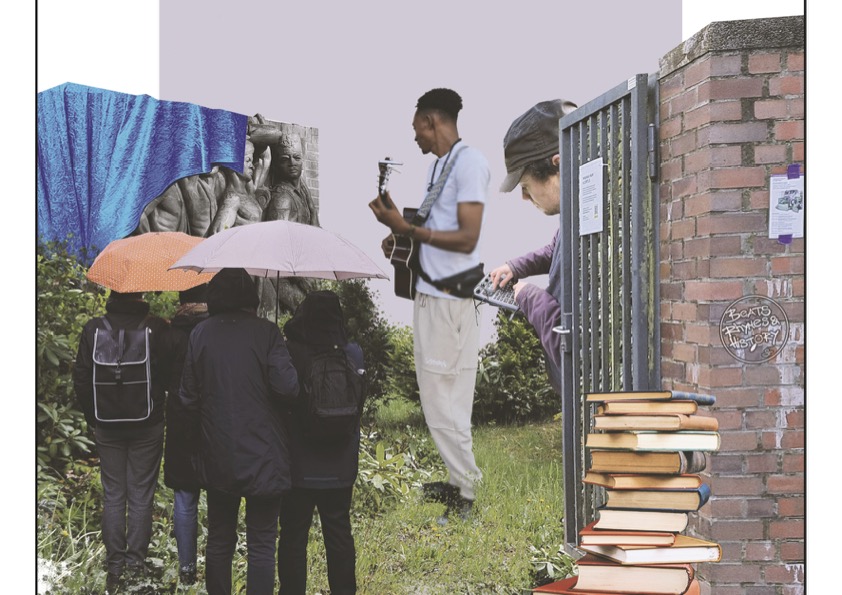
In 2024, the City of Hamburg adopted Decolonise Hamburg!, a groundbreaking decolonisation strategy aimed at critically engaging with the city’s colonial legacy. Developed collaboratively with civil society, the framework embeds decolonial objectives across research, education, culture, and public administration. It not only redefines the city’s relationship with its past but also actively promotes inclusive dialogue and forward-looking action.
A new strategy for confronting colonial history
Hamburg’s involvement in colonial exploitation was substantial. In the late 19th century, local merchants pushed for the German Empire’s colonial expansion. From the Baakenhafen port, ships were dispatched that supported violent campaigns in present-day Tanzania and Namibia, including the genocide of the Ovaherero and Nama people between 1904 and 1908.
Yet for decades, this history remained largely unacknowledged in Hamburg’s public discourse. The postcolonial culture movement, led by BIPoC and migrant-diasporic communities, challenged this silence, demanding a reckoning with the city’s imperial past.
Hamburg began its strategic response in 2014, when the Senate committed to reappraising the city’s colonial history. A research centre was founded at the University of Hamburg, and in 2017, a Colonial Heritage Round Table was established to ensure broad cultural participation. In 2019, a migrant-diasporic Expert Advisory Board was appointed by the Senator for Culture and Media to guide the development of Decolonise Hamburg!
Repositioning citywide postcolonial remembrance
The framework includes a citywide postcolonial remembrance concept that mobilises institutions, communities, and public bodies. The strategic process has been informed by longstanding advocacy from Black, diasporic, and postcolonial organisations who have drawn attention to the glorification of colonial figures in public monuments, buildings, and street names.
The strategy has five core goals: deepen interdisciplinary academic research on colonialism; disseminate knowledge on colonial legacies to the public; develop new forms of remembrance and decolonial commemorative spaces; foster dialogue on colonial injustice and promote reconciliation; and shift perspectives in postcolonial remembrance by empowering BIPoC communities and collaborating with people from formerly colonised nations.
Implementing and institutionalising change
A series of impactful initiatives have emerged. A dedicated decolonisation officer and a promoter position were established within Hamburg’s Department of Culture. And museums now work with Global South scholars to research and return looted colonial-era artifacts, including the full restitution of the Benin Bronzes.
Meanwhile, renaming campaigns led by civil society resulted in streets such as Woermannstieg and Woermannsweg being renamed Louisa-Kamana-Weg and Cornelius-Fredericks-Stieg – honouring victims of colonial violence. The Hamburg State Archive has also developed strategies to address problematic street names more systematically.
Memory in Motion – a new transnational network on education and memory of colonialism in Germany – and a new public festival DIGGAHH organised by Hamburg-based initiatives from civil society and the BIPoC community – foster dialogue, innovation, and new forms of public engagement with colonial memory.
Towards inclusive cultural futures
While progress has been made, the Decolonise Hamburg! strategy acknowledges ongoing challenges and the need for sustained effort. It positions postcolonial culture and cultural participation as vital components of urban identity, offering a replicable model for other cities navigating the legacies of colonialism.