






	---
title: Germany
type: taxonomy_archive
taxonomy: country
slug: germany
term_id: 156
permalink: "https://worldcitiescultureforum.com/country/germany/"
post_count: 9
---

# Germany

Posts in this archive: 9

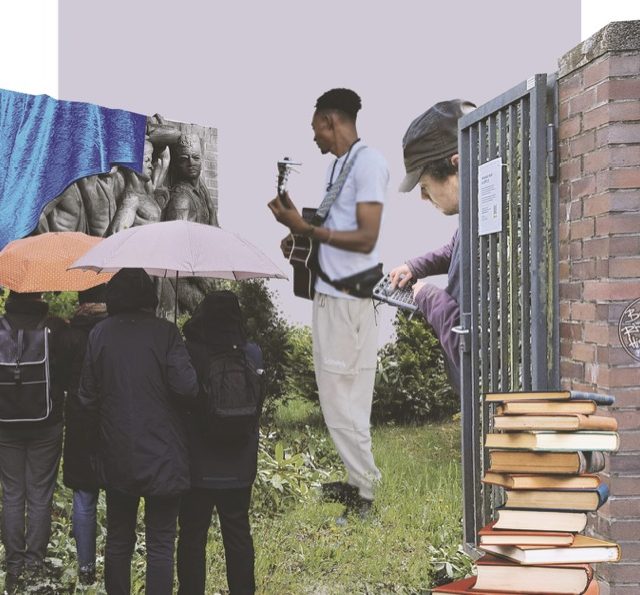
- [How Hamburg is decolonising its neighbourhoods and institutions](https://worldcitiescultureforum.com/wp-content/uploads/wp-mfa-exports/city-project/decolonisation-how-hamburg-is-decolonising-its-neighbourhoods-and-institutions.md) — In 2024, Hamburg launched 'Decolonise Hamburg!', a citywide decolonisation strategy involving civil society, institutions, and government. It reappraises colonial history through research, education, and cultural participation, empowering BIPoC communities and establishing postcolonial remembrance in public space. Initiatives include renaming colonial street names, restituting looted artefacts, and creating transnational networks. The strategy serves as a model for cities seeking inclusive, historically grounded, and participatory cultural transformation.
- [Hamburg’s INTRO programme connects professional artists in exile and cultural institutions](https://worldcitiescultureforum.com/wp-content/uploads/wp-mfa-exports/city-project/hamburg-intro-programme-for-refugee-artists.md) — Launched in 2019 by Hamburg’s Ministry of Culture and Media, the INTRO programme supports refugee artists through institutional partnerships, workshops, and funding. The initiative aims to foster cultural inclusion, challenge restrictive institutional norms, and promote mutual learning and cultural exchange. By enabling 12-month collaborations, it helps artists build networks and visibility, while supporting cultural institutions in evolving toward more inclusive, anti-discriminatory practices rooted in global dialogue.
- [How Hamburg put children and young people in charge of culture strategy](https://worldcitiescultureforum.com/wp-content/uploads/wp-mfa-exports/city-project/youth-culture-how-hamburg-put-children-and-young-people-in-charge-of-culture-strategy.md) — Hamburg’s Framework for Children and Youth Culture redefines cultural policy by centring youth participation. Developed through a multidimensional participatory culture strategy, it reflects the real needs and desires of the city’s children and young people. With tools like the Hamburg Children’s Manifesto and a newly forming Council of Culture for Children and Young People, the city is embedding inclusive culture into its institutions and setting a new benchmark for long-term youth engagement in cultural policy.
- [Culture and collaboration in Cologne’s meanwhile spaces](https://worldcitiescultureforum.com/wp-content/uploads/wp-mfa-exports/city-project/cologne-meanwhile-spaces-cultural-transformation.md) — In Cologne’s city centre, culture is being tested as a catalyst for urban revival. Launched in 2024, an innovative collaboration between Cultural Space Management and TH Köln University is transforming three vacant retail units near Schildergasse and Hohe Straße into vibrant “meanwhile spaces.” By curating cultural pop-ups, performances, and community-led interventions, the project explores how temporary uses can attract new audiences, extend city life beyond retail hours, and foster social diversity. Through this living laboratory, Cologne is reimagining how culture can drive the renewal of central urban spaces in transition.
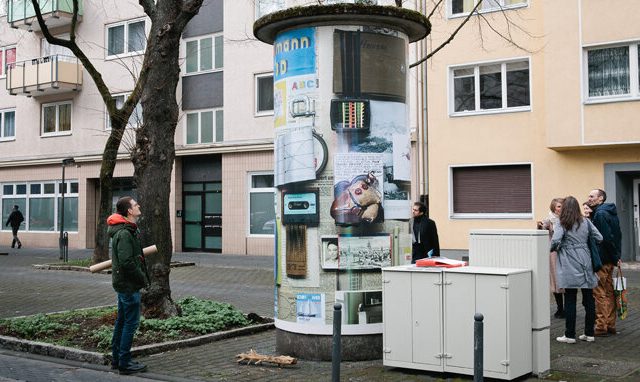
- [Art Everywhere: Cologne’s advertising pillars turned into open-air art museum](https://worldcitiescultureforum.com/wp-content/uploads/wp-mfa-exports/city-project/art-on-cologne-advertising-pillars.md)
- [How Cologne used culture to revive Neumarkt Square](https://worldcitiescultureforum.com/wp-content/uploads/wp-mfa-exports/city-project/cologne-cultural-activation-of-neumarkt-square.md) — Once Cologne’s historic Neumarkt square was better known for decline than community. In 2023, the city launched Take a Seat—a cultural programme combining temporary architecture, performances, and community co-creation—to reclaim the square as a safe, vibrant civic space. Over two summer months, Neumarkt was transformed into a hub of cultural life, offering a model for how cities can use culture to spark urban renewal.
- [Cologne](https://worldcitiescultureforum.com/wp-content/uploads/wp-mfa-exports/city/cologne.md) — Cologne is a hub for media innovation in the Rhineland, with prosperous film, broadcasting, games, design, and IT industries. Content creators, artists, creative entrepreneurs, e-sports professionals, industrial designers, and successful brands all drive the creative economy and shape the future of Cologne in unique ways. With a population of over one million people, the city punches above its weight with approximately 6,500 media and creative companies, generating €9.5 billion annually and employing roughly 60,000 people. 
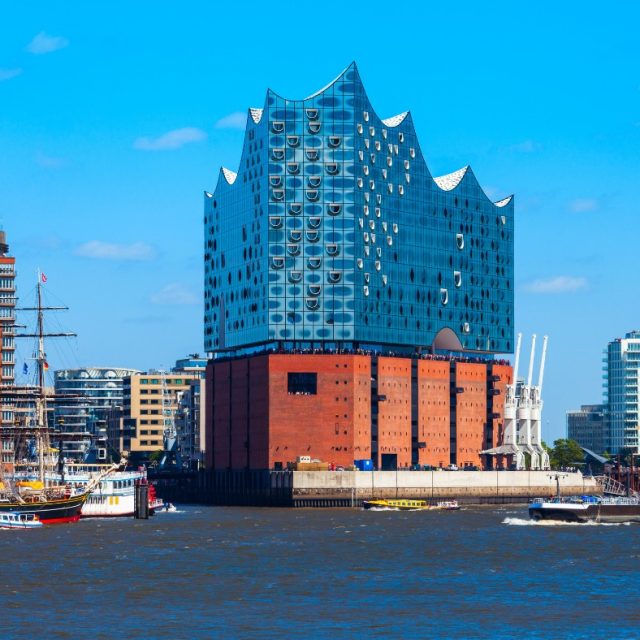
- [Hamburg](https://worldcitiescultureforum.com/wp-content/uploads/wp-mfa-exports/city/hamburg.md) — Hamburg boasts an impressive array of cultural institutions, with over 300 in total. Among them, the renowned Elbphilharmonie Hamburg stands out. Opened in 2017, this concert hall is perched on the banks of the River Elbe, at the tip of the HafenCity district, in close proximity to the UNESCO World Heritage site 'Speicherstadt with Kontorhaus district and Chilehaus.'
- [Herzog & de Meuron elevated Hamburg's Elbphilharmonie to global prominence](https://worldcitiescultureforum.com/wp-content/uploads/wp-mfa-exports/city-project/elbphilharmonie-hamburg.md) — How Hamburg created landmark concert hall The Elbphilhamonie within an existing heritage building, creating a new iconic focal point for the city's cultural scene.