How Hamburg put children and young people in charge of culture strategy
Project: Codeveloping a Children’s Manifesto for Arts Funding and Council of Culture for Children and Young People
In 2024, the Ministry of Culture and Media in Hamburg introduced a revised framework for children and youth culture, marking a significant policy shift toward inclusive culture and youth participation. This update moves away from traditional institution-centred models and instead asks: What matters most to young people in the cultural life of their city?
For the first time, young people have been systematically engaged in the development of Hamburg’s city-level cultural policy. Their insights, needs, and visions directly informed the new framework, built through a participatory culture strategy involving administration, cultural professionals, researchers, and – most crucially – children and youth themselves.
Engaging young people and cultural institutions to shape cultural strategy
This pioneering participatory process raised important questions: How can young people be included in administrative policymaking in a meaningful and representative way? How do we ensure diversity within youth voices, and what formats allow for equal footing between adult experts and young contributors?
There was also the broader issue of institutional readiness: cultural policies have historically been designed without input from young audiences. Shifting this paradigm required a transformation in mindset and process.
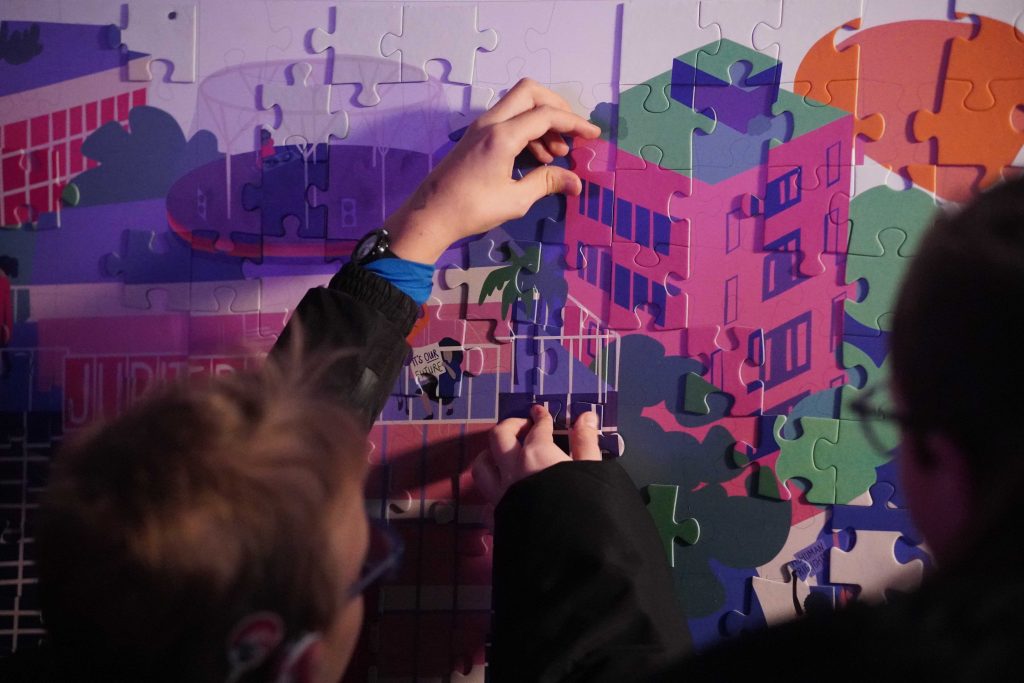
Over two years, multiple participation formats were implemented. Most notably, the FUNDUS THEATER – a research theatre for young audiences – conducted a youth-led engagement process with around 120 children and adolescents. This effort culminated in the Hamburg Children’s Manifesto for Arts Funding, a pioneering document that articulates what young people observe, want, and imagine for the future of cultural life in their city.
Simultaneously, teams of experts from arts education and research worked alongside representatives from the cultural, educational, and social ministries. These multi-professional teams synthesised youth perspectives with institutional insights, generating a grounded and forward-looking strategy.
The result: three overarching strategic priorities for the next decade – enhancing diversity competences, strengthening democratic cultural education, and deepening cross-sector collaboration.
Embedding participation in governance
To ensure long-term implementation, Hamburg is establishing a Council of Culture for Children and Young People. This multi-professional governance body will bring together officials from multiple ministries, arts education professionals, and young people themselves. The council will guide and oversee the implementation of the framework, and design participatory mechanisms that bridge power imbalances between youth and adults.
Through this, Hamburg not only fosters a culture of participation, but embeds children and youth culture as a central component of its civic and cultural identity. The city’s commitment to learning from young people positions it as a leader in participatory cultural governance.