Culture After Dark: Three Ways Cities Are Supercharging the Night-Time Economy
Insights from the 14th World Cities Culture Summit. Blog by Communications Intern, Hannah Reid.
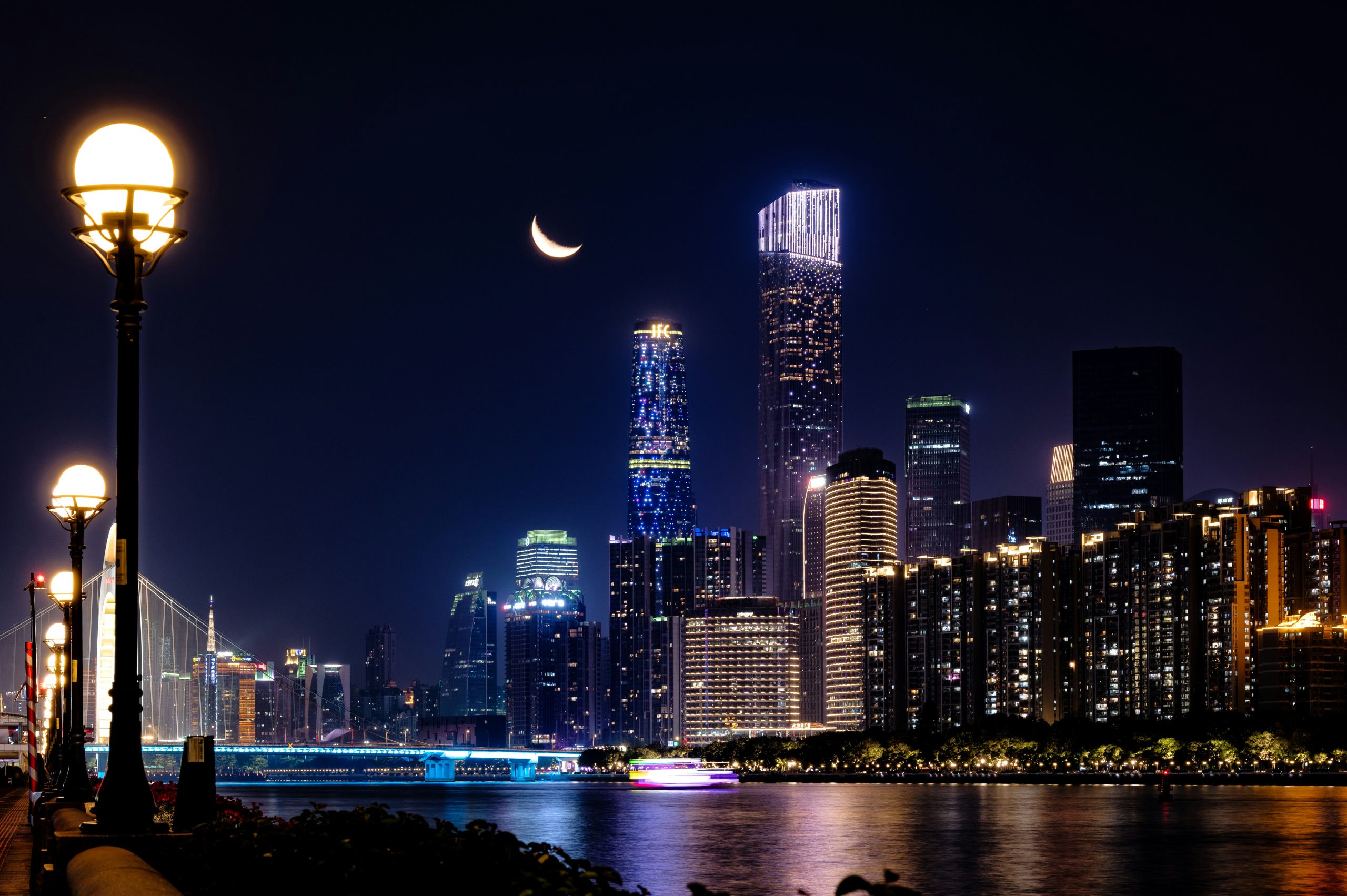
Cities worldwide, from Guangzhou to Toronto, are increasingly placing culture at the heart of their night-time economies. Our 5th Edition World Cities Culture Report shows that what was once an overlooked policy area is now firmly mainstream: 97% of cities are actively supporting night-time initiatives, and 59% have a dedicated night-time strategy. These strategies are strengthening cultural life after dark and helping cities safeguard the venues, workers and experiences that make urban nights vibrant and inclusive.
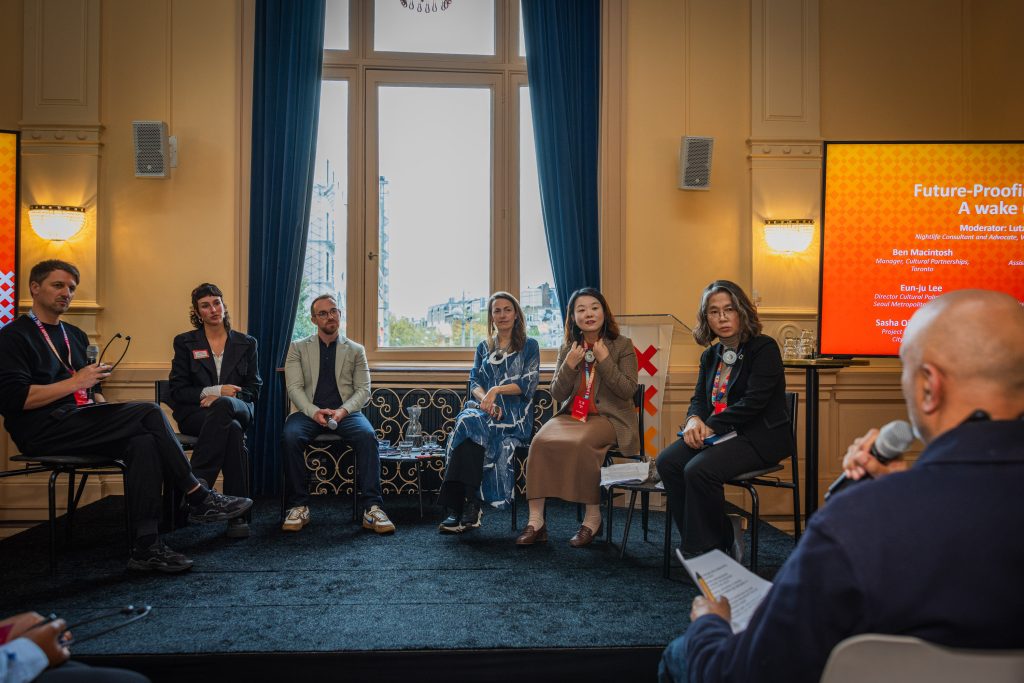
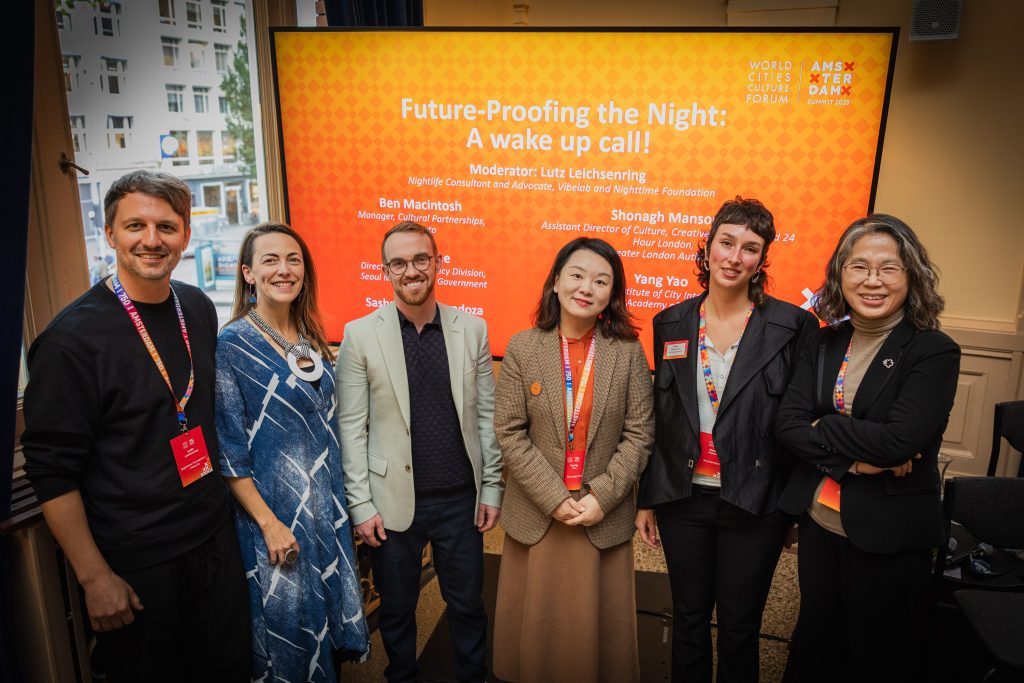
At the 14th World Cities Culture Summit in Amsterdam, delegates from Seoul, Guangzhou, London and Toronto discussed how to future-proof the night in a session chaired by Vibelab Nightlife Consultants. This session drew on findings from the Report and built on insights from the Night-Time Policy Accelerator, hosted by VibeLab at our 2024 Summit in Dubai. Themes ranged from safeguarding grassroots cultural spaces and smarter licensing for venues to affordable transport and stronger protections for night workers.
As cities continue to recover from the Covid-19 pandemic shutdowns, cultural policy must address the wider conditions that make night-time economies thrive – from safety, youth empowerment, creative ecosystems, inclusivity and environmental sustainability.
Here are three ways cities are growing their night-time economies through culture:
Guangzhou’s Night Markets: An Inter-Generational Approach to the Night-Time Economy
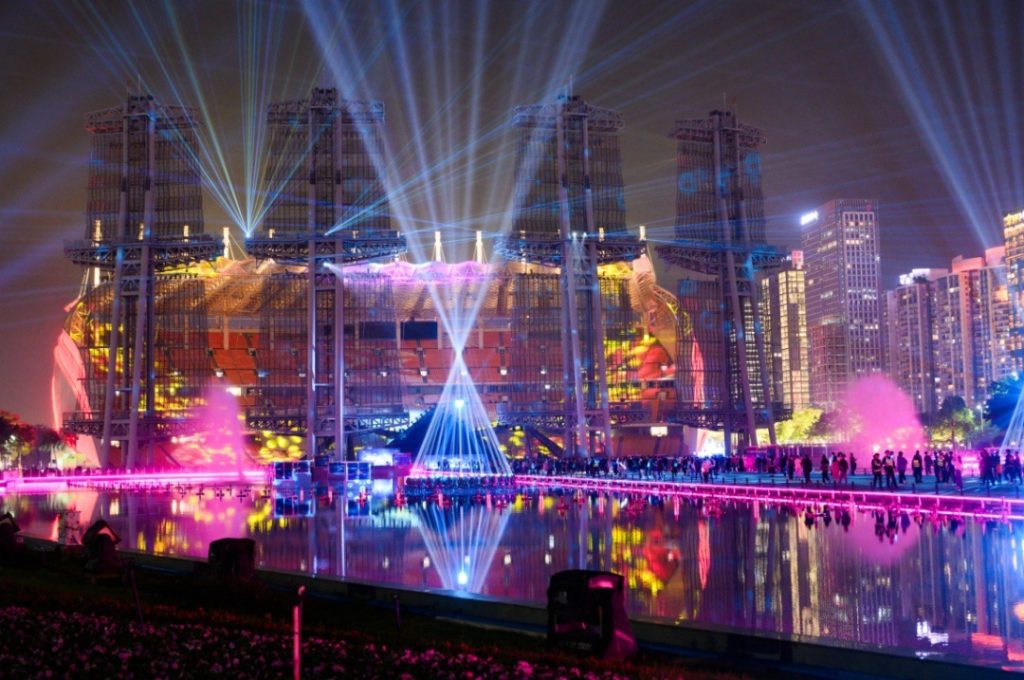
Nightlife is far more than nightclubs. That’s why the Guangzhou Commerce Bureau is drawing families and visitors into an expanded evening economy that blends culture, commerce, sport, food and festivals. Guangzhou has the largest night-time consumer economy of any Chinese city. Through the Project Young City Yeah Market (‘Yeah’ means ‘Night’ in Cantonese), the city is activating public spaces with over 600 events and programmes designed for all ages. These include the Guangzhou International Light Festival, which will transform the Pearl River into a 360-degree immersive light-art experience; the Canton Fair’s Music and Food Carnival; and the International Shopping Festival, which will boost footfall for local businesses while offering a wide range of social activities for residents young and old.
Stockholm and Seoul are also lighting up their nights, hosting major events such as Seoul’s Lantern Festival and Stockholm’s Nobel Week Lights – showing how cities can use evening culture to connect communities and families, and strengthen local identity and pride.
Melbourne’s Mission: Making Music Venues Sustainable
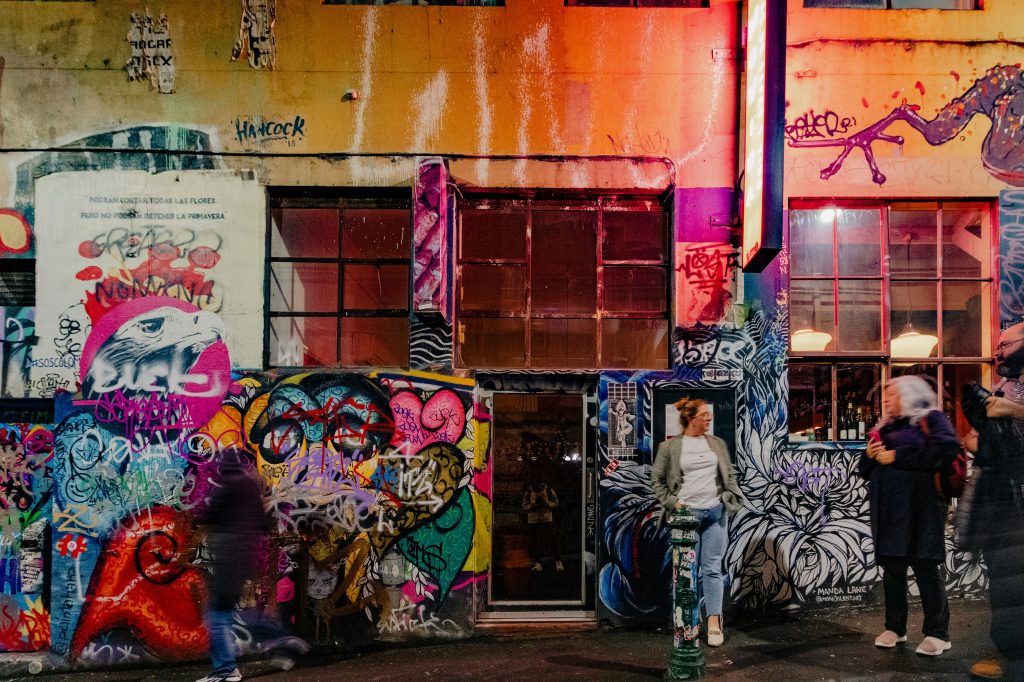
Melbourne is demonstrating how cultural policy can address wider urban challenges by linking the night-time economy with climate action. Through Green Music Australia, the city is helping music venues cut waste, improve energy efficiency and build long-term resilience. Its Green Action Plan, an eight-week subsidised course, supports organisations to embed climate goals, set emissions targets and use real case-study data to plan their transition. Venues that reduce energy consumption, waste and single-use plastics are rewarded with Green Music Venue certification, signalling how cultural spaces can lead the shift to a more sustainable urban future.
Sydney, likewise, is showing how investing in culture strengthens both the night-time economy and a city’s social and economic vitality. The industry-led Vote Music campaign has successfully pushed for stronger public backing for artists and live music, securing AUD 103 million in night-time investment and prompting the creation of a government office for contemporary music. By treating culture as essential infrastructure, Sydney is reinvigorating its night-time sector while ensuring that creative workers and venues have the support they need to thrive.
Together, Melbourne and Sydney show how cities are recognising culture as essential to a vibrant night-time economy – and as a practical tool for tackling broader challenges, from climate resilience to economic renewal and community wellbeing.
London’s night-time cultural programming: a catalyst for high-street regeneration
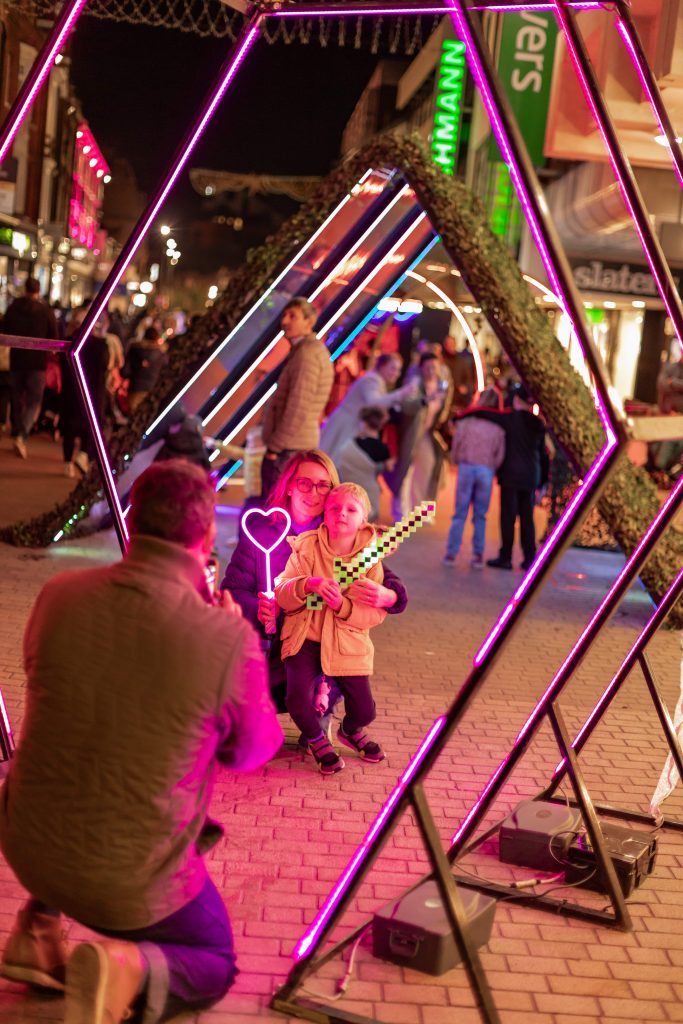
London is using night-time culture to revitalise its high streets, with different local boroughs (otherwise known as ‘districts’) participating in Mayor Sadiq Khan’s Night-Time Enterprise Zones. By encouraging shops and services to stay open past 6pm, the Zones aim to boost footfall and re-energise local economies. Cultural programming is central to this approach: Winter Lights Festivals, Library Lates, night markets, and other evening activations help reposition town centres as safe, welcoming, and culturally vibrant destinations after dark. Early pilots showed that footfall in participating high streets increased by up to 22%, local spend between 6pm and 9pm rose by as much as 70%, and nearly 7 in 10 visitors reported feeling safer during events – demonstrating how culture can simultaneously drive economic recovery, community confidence, and high-street revitalisation.
Creating a safe, vibrant and inclusive nightlife
More widely, safety is emerging as a central priority in cities’ night-time strategies – investments in lighting, transport, and public-space design to make nights safer and more welcoming for all. Across the World Cities Culture Forum network, 69% of cities – from Amsterdam to Jakarta, Taipei, and Sydney—are developing or implementing safety-at-night policies and strategies and culture is supporting these aims. Amsterdam is fostering inclusive night-time culture through its new Institute for NightCulture and support for venues, including queer space Club Raum, while Brussels is leading initiatives to improve safety for women and marginalised groups.
Across our network, cities are showing that a thriving night-time economy depends on more than extended opening hours. By investing in culture, supporting creative workers, and safeguarding inclusive and vibrant spaces after dark, cities are boosting local economies, strengthening communities, and making urban nights safer and more dynamic for everyone.