
Heritage Infrastructure: Transforming İstanbul’s 19th-century Rami Barracks into Rami Library
Project: Restoring a landmark heritage building into a cultural hub that supports lifelong learning
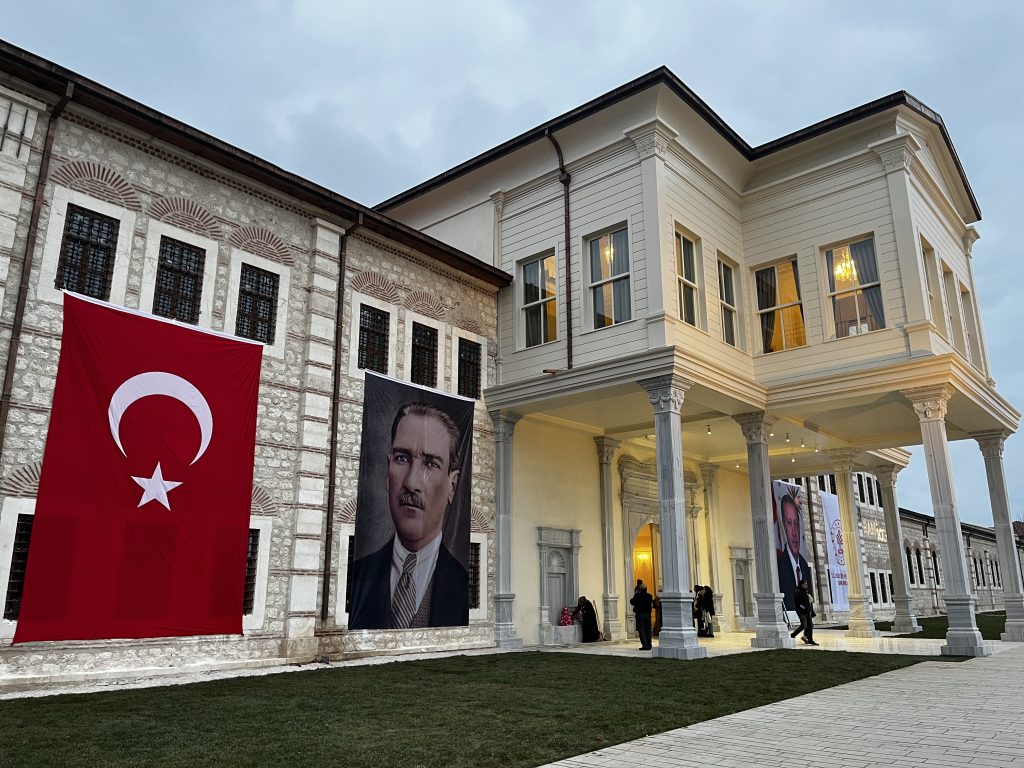
The transformation of the Rami Barracks into the Rami Library represents one of Türkiye’s most ambitious heritage-led cultural infrastructure projects. Situated in İstanbul’s Eyüpsultan district, the library was inaugurated in January 2023 after more than a decade of restoration and adaptive reuse. Built as military headquarters during the late Ottoman period, the barracks had fallen into disuse. Today, they stand as one of Türkiye’s largest and most innovative library complexes, bridging cultural heritage with contemporary knowledge ecosystems.
Transforming a 19th-century barracks into a modern fit-for-purpose library
The central challenge lay in balancing the preservation of the 19th-century barracks with the demands of a modern information centre. The building, originally constructed in 1828 under Sultan Mahmud II, required extensive conservation to protect its historical character while addressing infrastructural incompatibilities. Years of neglect had left the structure vulnerable, with issues ranging from architectural instability to insufficient environmental controls for housing sensitive collections. Policymakers and heritage experts faced the dual task of conserving the building’s architectural integrity and equipping it with modern facilities necessary for a 21st-century cultural hub.
Restoration work began in 2010 and relied on detailed historical research, architectural documentation, and advanced conservation methods. Infrastructure was modernised with new systems for air conditioning, automation, and security, ensuring both the safety of users and the preservation of collections. The result was a library complex that integrates historic authenticity with state-of-the-art design.
Providing a diverse cultural ecosystem to support lifelong learning
The Rami Library extends beyond traditional library services to provide a diverse cultural ecosystem to support lifelong learning. It includes thematic spaces such as story rooms for babies and children, specialised libraries on Atatürk and biography, study areas for high school and university students, 24/7 reading rooms, and performance halls. It attracts an average of 7,400 visitors annually, serving all age groups with facilities that combine education, recreation, and cultural participation.
Innovative services, including podcast and audio libraries, support digital access, while the Book Hospital and Manuscript Hospital contribute to the preservation and restoration of rare texts. These facilities demonstrate how adaptive reuse can generate both heritage conservation and future-oriented cultural production.
Its landscaped 51,000 square metre grounds provide walking paths, playgrounds, and outdoor activity spaces, reinforcing the library’s role as a social as well as intellectual hub. The addition of the National Archive Building within its grounds further strengthens its policy impact, creating a secure and technologically advanced centre for researchers. This integration enhances both knowledge accessibility and the preservation of national memory.
With its historical identity that keeps the past alive and its innovative service approach that guides the future, Rami Library is not just a library, but a unique centre where information and life intertwine.


