Cultural Innovation: Expanding 2,000-year-old Guangzhou Flower Market’s cultural offering
Porject: Developing ancient traditions with new nighttime economy entertainment
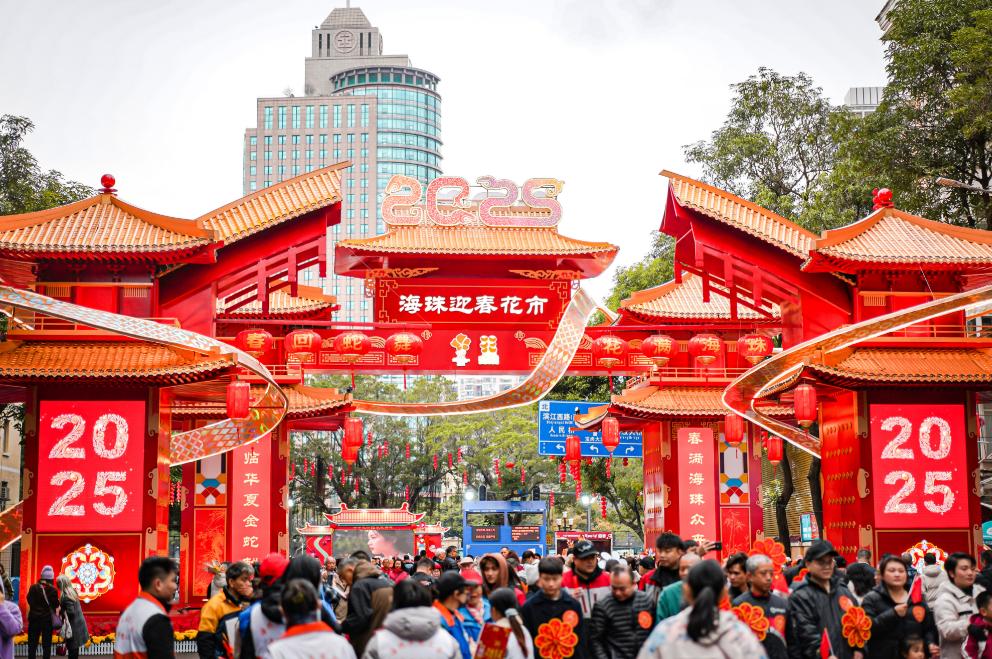
Recognised as a national intangible cultural heritage in 2021, Guangzhou’s 2,000-year-old Spring Festival Flower Market attracts visitors to the “City of Flowers”, while driving economic growth through a thriving Chinese and international flower industry. Recent innovations – including street food stalls, drone light shows, and the Water Flower Market – have extended its impact on the nighttime economy, turning heritage into a powerful tool for urban innovation.
An ancient Lunar new year tradition, recently recognised as intangible cultural heritage
Held in the days leading up to Lunar New Year, the Guangzhou Flower Market – or Spring Festival Flower Market – is one of southern China’s most vibrant public cultural traditions. With roots in the Ming and Qing dynasties, the custom of “walking the flower street” to buy symbolic New Year flowers like peach blossoms, kumquats, and narcissus continues to draw millions of citizens and tourists. It is a ritual of renewal and good fortune, deeply woven into the identity of this city long known as the “City of Flowers.”
In 2021, the event was officially recognised as a national intangible cultural heritage project, marking its significance as both a living tradition and a modern cultural asset. The market features flower displays, traditional crafts, lion dances, and community performances, connecting generations of Guangzhou residents to the city’s centuries-old love for horticulture and festive gatherings.

A cultural driver for the flower industry and the nighttime economy
Alongside its daytime heritage appeal, the flower market has evolved into a cultural driver for the nighttime economy. In recent years, the city has introduced a range of experiential offerings to attract new audiences and extend visitor engagement into the evenings. These include newly-designed street food stalls that offer traditional snacks and contemporary cuisine, flower-themed drone light shows in the night sky, and the unique “Water Flower Market,” where installations and performances activate the riverside. Cultural zones allow visitors to explore the market in costume or take part in immersive storytelling based on local folklore, blending nostalgia with innovation.
The flower market has also positioned the city as one of China’s largest hubs for flower production and distribution, with more than 3,000 flower varieties grown locally. Flowers from Guangzhou are sold across China and exported to Europe, the United States, and Southeast Asia. Events such as Flower Expo Asia, held annually in Guangzhou, bring together thousands of global brands and buyers, reinforcing the city’s reputation as an international floral centre.
Together, these experiences transform the Guangzhou Flower Market into a multi-sensory festival of heritage, food, commerce, and celebration. It is now a key part of the city’s branding – “Celebrate the New Year in Guangzhou, the Flower City in Bloom” – drawing national and international attention. At once ancient and forward-looking, the market is a compelling case of how global cities can sustain intangible cultural heritage while fuelling urban renewal, tourism, and innovation through cultural infrastructure.