Barcelona’s Creative Factories Fàbriques de Creació
Projects: Transforming industrial heritage into cultural infrastructure
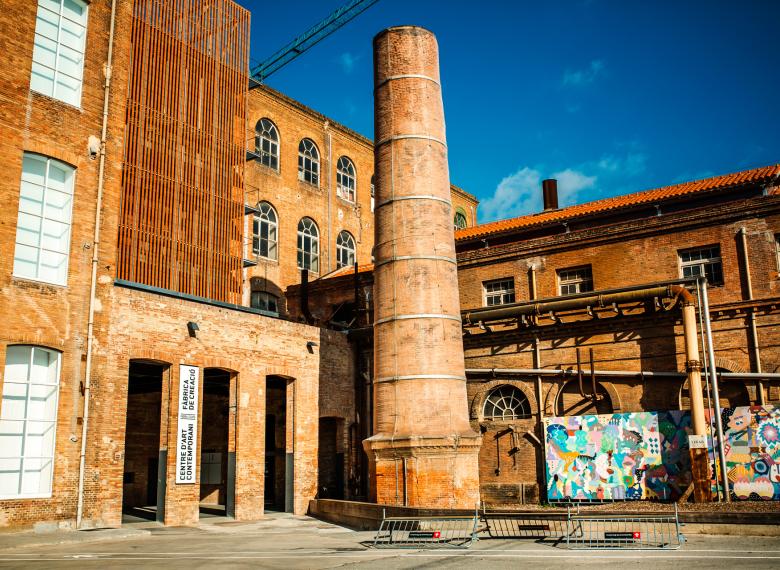
The Fàbriques de Creació (Creative Factories) programme is a pioneering initiative of the Barcelona City Council’s Department of Culture (ICUB). Since 2007, it has transformed over 11 disused industrial buildings into 30,000 m² of inclusive, affordable and multidisciplinary spaces for artistic creation, research, production, and public presentation. By converting abandoned factories into cultural infrastructure, the city not only preserves its industrial heritage but also strengthens its cultural ecosystems and regenerates neighbourhoods. Barcelona’s vision goes further than the local level: through international residencies, strategic partnerships, and the development of satellite hubs, the city aims to consolidate its position as a global reference point in cultural policy and creative infrastructure.
Cultural policy challenges in a changing urban landscape
Like many cities, rising property values and tourism-driven gentrification threaten the affordability of cultural spaces in Barcelona, making long-term anchoring of artistic hubs a critical issue. In response, ICUB set up a network of Creative Factories. Each hub is designed to nurture local talent, promote intercultural dialogue, and safeguard accessible space for artists. Fabra i Coats, the flagship facility, operates as a multidisciplinary hub offering studios, residencies, exhibitions, and training programmes, while serving as a cultural engine for the Sant Andreu district.
Yet demand from local creative communities continues to exceed the available capacity. Artists frequently seek more professional training, residency opportunities, and workspaces than the network can currently provide. In addition, access to facilities is uneven across districts.
Innovative strategies for international cultural development
While most of the creative factories have many international connections, the aim of the network is to foster structured international programmes for artist mobility and intercity cooperation. Institutional agreements have been set up with Seoul in Korea and Quebec in Canada. In 2024, the Barcelona Network received over 400 registrations on its digital platform, signaling high demand for international collaboration.
A dedicated Network Office coordinates the programme, overseeing residencies, exchange schemes, knowledge transfer initiatives, and funding distribution, ensuring that the different centres operate as a cohesive system. Innovative financing supports the international expansion of the Barcelona Creative Factories. The city has introduced a public–private Creative Infrastructure Fund that mobilises municipal budgets, European Union support through Creative Europe, and private investment. Land-use planning also plays a vital role. Through cultural lease clauses and zoning regulations, the city safeguards affordable creative space and resists displacement pressures linked to speculative real estate and mass tourism.
International recognition has followed, with coverage in ArtForum and Le Monde praising the model as an innovative approach to civic-led cultural regeneration that addresses the risks of gentrification. Collaborations inspired by European networks such as Trans Europe Halles further position Barcelona as a leader in sustainable cultural infrastructure.

Civic-led cultural regeneration of industrial urban areas
The Creative Factories network demonstrates how cities can safeguard cultural spaces against touristification while embedding them in local community identity. Its internationalisation strategy emphasises exchange-driven residencies and collaborative governance rather as well as touring exhibitions, strengthening Barcelona’s creative brand on the world stage. By combining infrastructure, funding mechanisms, land-use policy, and cultural governance, the city offers a transferable model for sustainable cultural policy. Early indicators, from high registration numbers to institutional agreements and international media recognition, suggest that Barcelona’s Creative Factories are emerging as a blueprint for civic-led cultural regeneration worldwide.