Supported by Bloomberg Philanthropies, the Leadership Exchange Programme was launched in 2018. It has since become our most valued programme with two successful rounds delivering 11 exchanges, involving 22 cities and more than 185 participants. We launched the third round of the Leadership Exchange Programme in 2026.
Conversations between city leaders at the annual World Cities Culture Summit often spark desire for further discussion and focus on specific challenges faced by multiple cities across the network. The Leadership Exchange Programme allows them to do this in-depth.
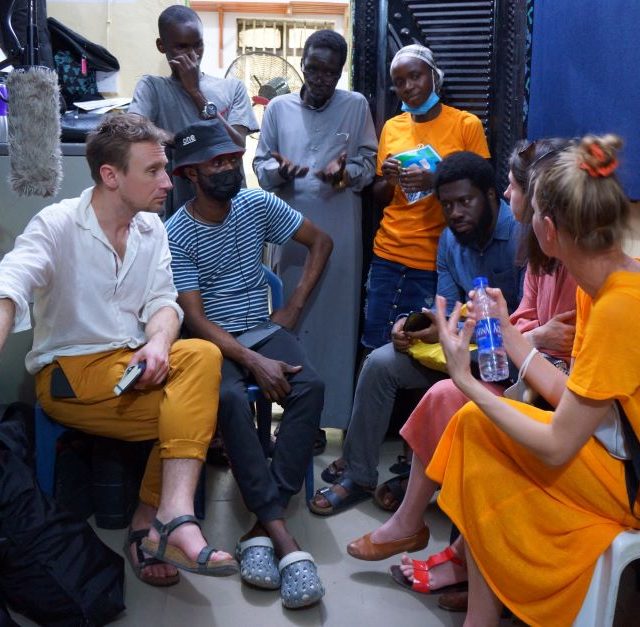
Through the programme, cultural city leaders can travel to another city and spend a few quality days with their peers, delving into a cultural policy topic and learning how different cities are approaching it. Exchanges can be one way, two way, or even involve multiple cities.
The Leadership Exchange Programme helps cities to grow in confidence and ambition, it accelerates learning and leads to new projects and policies being scaled in cities around the world. City leaders bring back ideas that they can adapt in their own cities; and share their learnings with the rest of the World Cities Culture Forum network.
Participants say the programme provides actionable insights and has a positive impact in their cities.
Supported by
World cities are at the forefront of current global changes – from migration and population growth to climate change and inequality. To meet these challenges, it’s vital that cities work together and learn from each other. That is why the Leadership Exchange Programme is so important.
Our Leadership Exchange Impact Report highlights each exchange and the tangible impacts that the programme has had on cultural policy in cities around the world.
The first cohort enabled four exchanges between 2018 and 2020 on the following topics:
How to grow affordable creative space
How culture is helping drive zero-waste cities
How to bring culture to people’s doorstep
How to reconcile with indigenous cultures
The second cohort took place between 2021 and 2023 enabled seven exchanges on:
How to make culture count: innovations in mapping data
How to design art biennales with civic participation
How to decentralise culture
How to hardwire affordable space in the city’s growth
How to deliver equity and inclusion within a cultural Olympiad
If you are a City Partner and would like more information on the third round of the Leadership Exchange Programme, please go to our Partners Hub. Applications are due by 31 May 2025.
How can all citizens enjoy the cultural riches of our cities? Can we celebrate the city’s cultural hidden gems and bring culture to people’s doorsteps? London’s Borough of Culture.
Participants from Amsterdam, Austin, London, New York, San Francisco, Sydney, and Warsaw met city planners, cultural leaders and artist studio providers, to learn from Toronto’s approaches to protecting affordable creative space.
Rapid development and regeneration in cities put affordable workspace, artists' studios, and cultural spaces at risk.
Artists move to affordable areas of the city and when property developers move into the area, artists are displaced by the rising rents
The City of Toronto has prioritised affordable art studios, by leasing city-owned spaces below market rate.
The indigenous communities play a significant role in the social fabric of Toronto and of Sydney. Yet both cities faced a common challenge: the historical lack of visibility and.
Data and mapping on cultural infrastructure provide key insights for evidence-based policy. Whilst cities have data on spaces for cultural consumption, there is little data on spaces for cultural.
Art biennales are emerging in many global cities as forums for art trade and also city branding, fostering cultural diplomacy and international exchanges. But can they help bring local.
Most of our cities struggle to retain affordable space as rapid development displaces creatives with rising rents and increased taxes. Cities are developing innovative solutions and models to secure.
Building on lessons from the pandemic, the cities discuss how to use technology to make grant-giving easy for artists and communities, particularly providing low-threshold grants.