How to protect culture at risk
Supported by Bloomberg Philanthropies
“I walked away feeling like a Culture at Risk program is possible in NYC.”
Leadership Exchange Participant
The Challenge
How can cities protect cultural and community spaces at risk from high rents, planning changes, and business rate increases? In March 2022, New York released a blueprint for the city’s Economic Recovery with a focus on equity and inclusivity. The plan included a commitment to create a “Culture at Risk” response team to protect New York City’s creative businesses and neighbourhood institutions. This was inspired by London’s Culture at Risk office.
The Exchange
New York learnt about the Culture at Risk office, which was set up in 2016 and in its first year, helped over 200 cultural spaces. The London office uses research and mapping to benchmark data and works with a range of city departments to inform new policy interventions. For example, it has implemented new policies to save London music venues and launched an LGBTQ+ Venues Charter to stem the loss of LGBTQ+ venues and encourage growth. New York’s objectives for the exchange where clear:
- How best to establish and grow a Culture at Risk Office.
- How to measure success.
- How to build equity into the programme.
Participants visited London cultural spaces that had been at risk including:
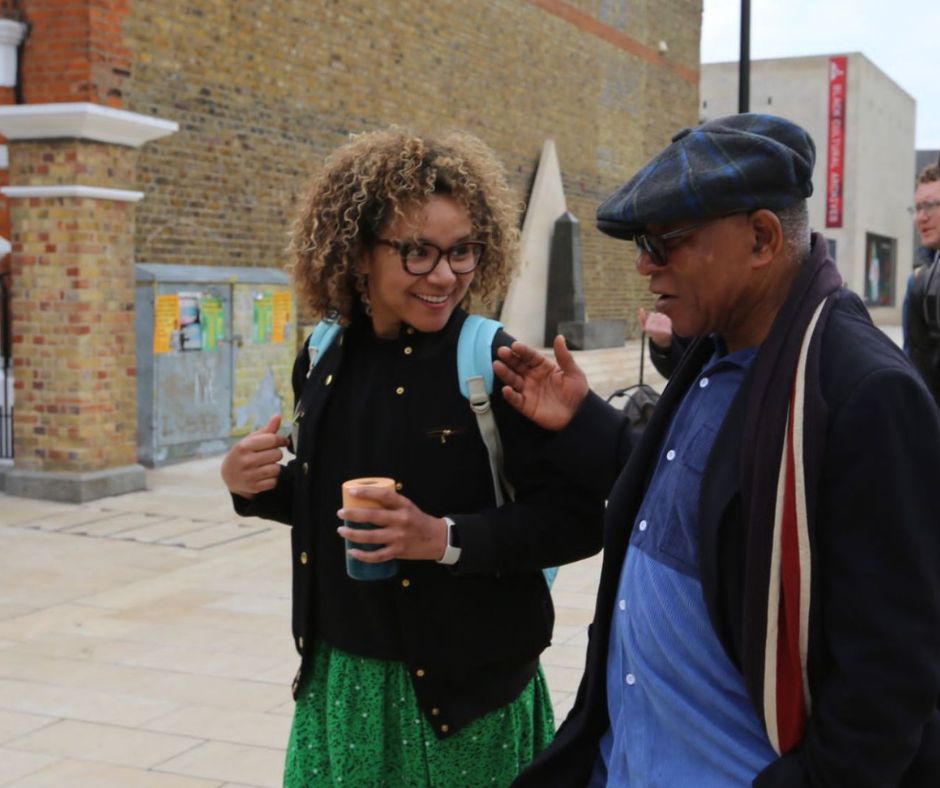
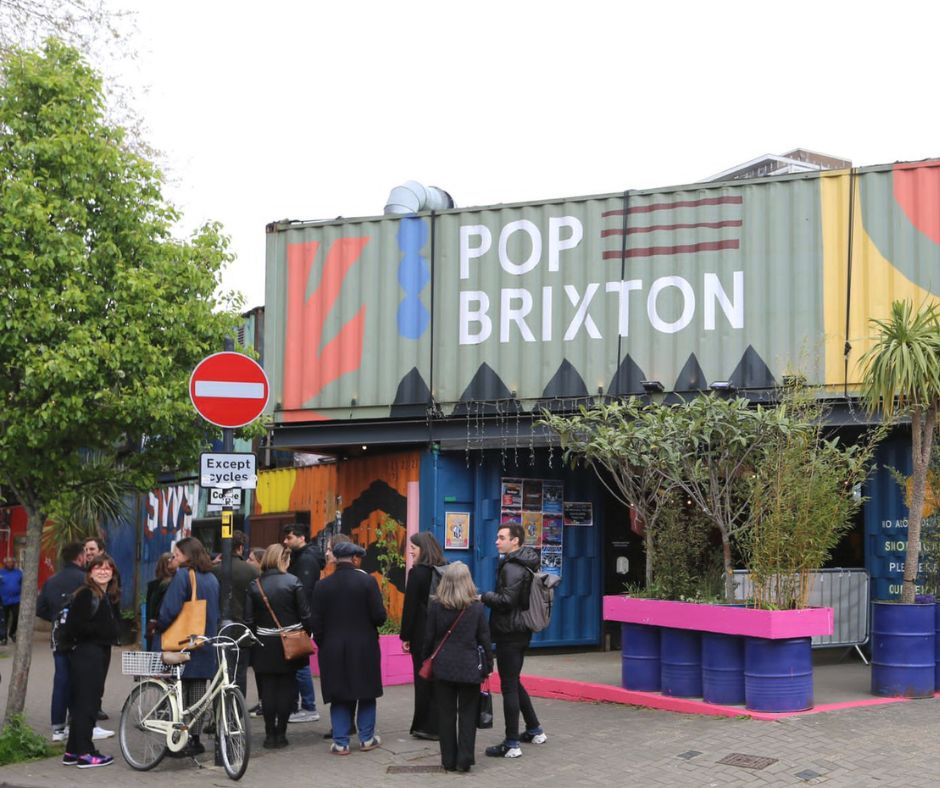
- Brixton, one of the most diverse neighbourhoods in London, visiting local landmarks such as the Black Cultural Archives and Brixton House both celebrating Afro-Carribean heritage.
- Somerset House Studios who offer spaces and support for up to 70 artists.
- Hackney Empire, where they met artistic director Yamin Choudry, and trustee, Jasmyn Fischer Rider, who spoke movingly about what “culture at risk” means to them as artistic leaders from ethnic minority backgrounds.
- Hackney Wick and Fish Island, one of the Mayor of London’s first designated Creative Enterprise Zones protecting affordable workspace and maker space for designers and creative working across the creative, digital and tech industries.
Lessons Learned
- Mapping cultural infrastructure enables the identification of venues at risk.
- Identifying areas where community and grassroots organisations are facing displacement can track geographical and thematic challenges such as music or LGBTQ+ venues.
- A tool like an LGBTQ+ Venues Charter can help make spaces more visible and valued in their neighbourhoods.
- Local insight is key to track spaces at risk and tailor responses to protect them. In London, the Culture at Risk office works closely with the 33 local boroughs.
- Creative Enterprise Zones can focus investment and efforts to protect at risk spaces and communities in a specific area.
Impact
New York is setting up a Culture at Risk office building on a tried and tested model in London. In addition, New York is able to bring in the expertise from multiple city departments beyond culture, including economic development, planning, and transport.
Adopting a cross-departmental approach from the outset means the office will be more efficient, fostering a comprehensive community protection strategy this exchange and discussions with London helped New York colleagues build equity into the programme and prioritise safeguarding spaces that offer social, cultural and economic services.
Read more about the exchange in our Leadership Exchange Impact Report.

Images Courtesy © WCCF