Cultural Villages: Preserving Betawi heritage while improving community welfare
Project: Supporting five designated cultural villages to promote local traditions and develop cultural tourism
Launched in 2022, Jakarta’s cultural village initiative supports five Betawi communities – Petukangan, Rawa Belong, Marunda, Condet, and Tanah Abang – to preserve heritage and improve welfare. Through community empowerment, cultural tourism, and traditional arts promotion, the programme strengthens local identity and enhances economic sustainability. Led by the Jakarta Culture Office and ADKI, this policy framework promotes inclusive cultural development while positioning Jakarta as a culturally grounded global city.
Culture to strengthen community welfare and heritage
In Jakarta, culture is not only a symbol of identity – it’s a strategic tool for strengthening community welfare. Cultural heritage fosters social cohesion, mutual support, and economic resilience. In a rapidly modernising and globalising city, grounding development in culture ensures that traditions are not lost but rather evolve to meet present-day needs.
To this end, the Jakarta Culture Office and the Indonesian Creative Village Association (ADKI) launched a multi-year programme to support Jakarta’s cultural villages across the city’s five administrative areas. The initiative aims to empower communities, identify and strengthen local heritage assets, and promote sustainable cultural tourism.
A 2022 cultural mapping study identified five areas as designated Betawi cultural villages – each selected for its rich historical, artistic, and social value.
- Petukangan (South Jakarta) is renowned for Silat Beksi, a type of martial art known for its close-distance combat style and lack of offensive leg action. Silat Beksi is also a product of various cultural influences, namely the acculturation between the Chinese and Betawi Culture.
- Rawa Belong (West Jakarta) is a hub for pencak silat martial arts practitioners. This martial art was recognised by UNESCO as an Intangible Cultural World Heritage in 2019.
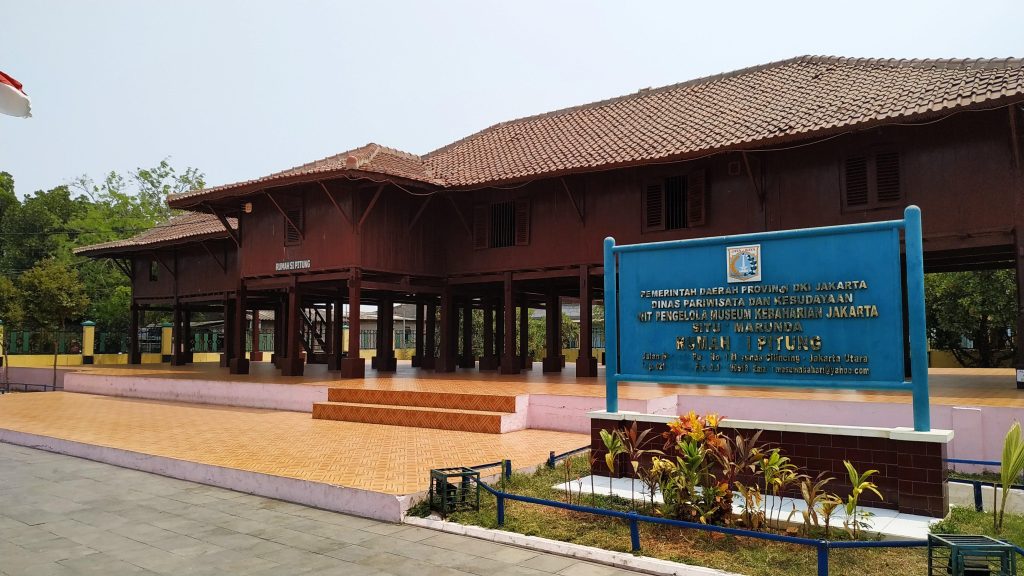
- Marunda (North Jakarta) is home to the Si Pitung House, celebrating a folk hero often called the Betawi Robin Hood. Rumah Si Pitung (House of Pitung) was once owned by the richest fish merchant in Marunda. The museum houses displays on Betawi culture and history, including Betawi cultural expert Ridwan Saidi’s musical instrument collection. The area also includes Al-Alam Mosque, a 16th-century landmark protected as official cultural heritage. It is is one of 12 tourist attractions in North Jakarta, and one of the oldest mosques in the city.
- Condet (East Jakarta) has long been a centre for Betawi identity. Known for local fruit production and traditional arts, it was officially designated a cultural zone by the city in 1974.
- Tanah Abang (Central Jakarta) preserves Pencak Silat Sikumbang, a distinct Betawi martial arts genre.
These villages serve as living repositories of Betawi tradition – showcasing martial arts, folklore, cuisine, language, and community events.
Strategic cultural development and local empowerment
The cultural village programme goes beyond preservation. It focuses on community empowerment, product development, and market expansion. Key strategies include establishing cultural centres, identifying new cultural epicentres, offering professional mentorship, and curating high-impact cultural events.
By investing in strategic partnerships, local capacity-building, and consistent monitoring, Jakarta aims to create a self-sustaining cultural ecosystem. This initiative also helps position Jakarta as a global cultural city that balances modern development with deep respect for local identity.