	---
title: Policymaking
type: taxonomy_archive
taxonomy: topic
slug: policymaking
term_id: 277
permalink: "https://worldcitiescultureforum.com/topic/policymaking/"
post_count: 46
---

# Policymaking

Posts in this archive: 46

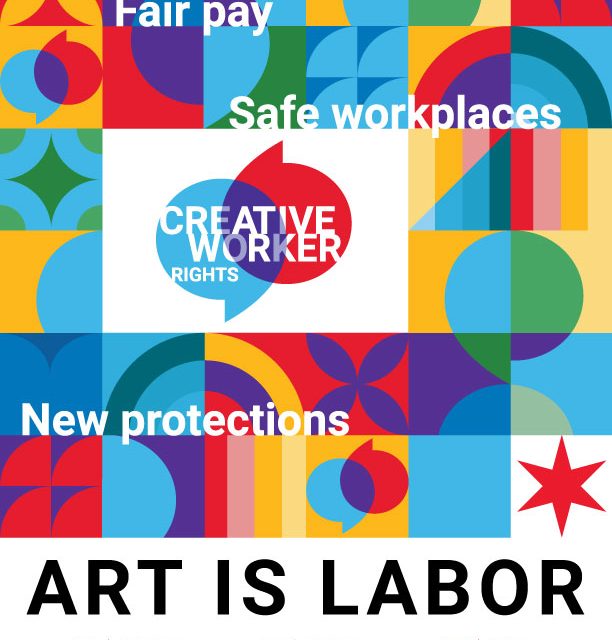
- [How Chicago embedded equity and worker protection into the city’s cultural policy framework ](https://worldcitiescultureforum.com/wp-content/uploads/wp-mfa-exports/city-project/chicago-art-is-labor-campaign.md)
- [5th World Cities Culture Report Reveals Culture Is Driving Urban Innovation Worldwide](https://worldcitiescultureforum.com/wp-content/uploads/wp-mfa-exports/post/launch-world-cities-culture-report-5th.md) — New report shows cultural participation is rebounding strongly, creative spaces are being protected, and the night-time economy has become a mainstream policy focus for global cities.
- [Blueprint for Cultural Policy](https://worldcitiescultureforum.com/wp-content/uploads/wp-mfa-exports/report/blueprint-for-cultural-policy.md) — Key cultural policy challenges that cities are addressing in 2025 and the solutions they are using
- [More Regional Trends](https://worldcitiescultureforum.com/wp-content/uploads/wp-mfa-exports/report/regional-cultural-policy-trends.md) — From Indigenous knowledge in Australasia to digital innovation in East Asia, cities are using culture to shape more inclusive, sustainable, and creative futures. Drawing on recent survey data and case study submissions from our cities, this section offers a snapshot of emerging cultural policy trends across regions.  While each region has its own distinctive priorities, common themes such as access to space, climate action, youth engagement, and equity, highlight the extent to which all major cities share similar challenges in defining tomorrow’s cultural landscape.
- [Focus on Africa](https://worldcitiescultureforum.com/wp-content/uploads/wp-mfa-exports/report/african-creative-capitals.md) — Discover how Africa's creative capitals are driving forward innovation in cultural policy amidst dramatic urban development
- [Ernesto Ottone, Assistant Director General for Culture, UNESCO](https://worldcitiescultureforum.com/wp-content/uploads/wp-mfa-exports/report/ernesto-ottone-world-cities-culture-report.md) — Foreword from Ernesto Ottone, Assistant Director General for Culture at UNESCO, to the World Cities Culture Report: 5th Edition
- [AI and Technology](https://worldcitiescultureforum.com/wp-content/uploads/wp-mfa-exports/report/ai-and-technology.md) — New cultural infrastructure and AI are reimagining how cities support digital innovation and creativity.
- [3rd Edition](https://worldcitiescultureforum.com/wp-content/uploads/wp-mfa-exports/report/world-cities-culture-report-2018-3rd-edition.md) — Exploring global cities' cultural impact on life through their policies, emphasising their pivotal role in shaping urban culture. Against a backdrop of a changing world order, increasingly divisive national politics and crises of national identity in countries around the globe, the World Cities Culture Report 2018 highlights a change in approach from local governments in world cities. Recognising that cultural investment over the last 20 years has sometimes unintentionally contributed to social pressures in global cities, the report finds that urban cultural policy is shifting towards more egalitarian and citizen-centred models.
- [Creative Strategists: Integrating artist residencies into Los Angeles County governance and initiatives](https://worldcitiescultureforum.com/wp-content/uploads/wp-mfa-exports/city-project/los-angeles-creative-strategist-programme.md) — Los Angeles County's Creative Strategist Programme embeds artists within government departments to address civic challenges through creative strategies. Since 2018, 12 artists have collaborated with various departments, enhancing public engagement, cultural participation, and equity. Their work demonstrates the value of integrating arts into governance, fostering innovation, and promoting inclusive policies that reflect the diverse communities of Los Angeles County.
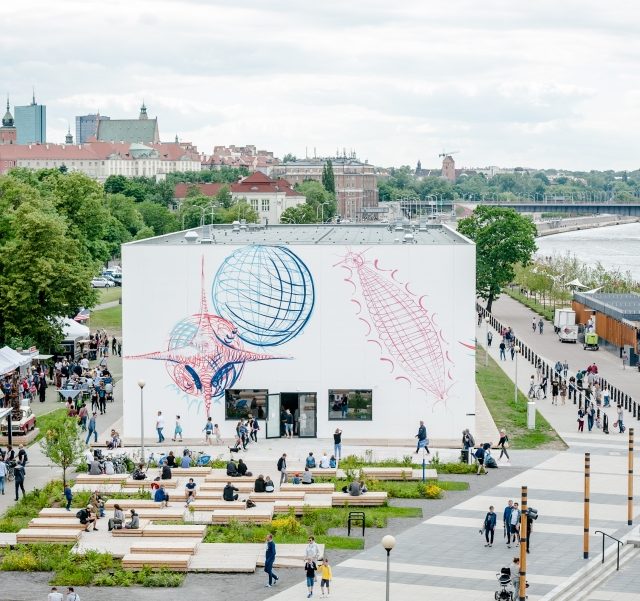
- [Cultural Infrastructure: Establishing a dedicated Pavilion of Dance in Warsaw ](https://worldcitiescultureforum.com/wp-content/uploads/wp-mfa-exports/city-project/warsaw-pavilion-of-dance.md) — Responding to a long-standing gap in infrastructure, the City of Warsaw is establishing the Pavilion of Dance and Other Performing Arts – a dedicated venue for contemporary dance and performance. Housed in the repurposed Pavilion on the Vistula – a former temporary Museum of Modern Art space – the initiative was shaped through deep consultation with the dance community and participatory architectural design. Set to launch a one-year pilot in 2025, the Pavilion marks a milestone in Warsaw’s cultural development, fostering visibility, creation, and connection for the performing arts.
- [World Cities Culture Trends Report 2025 ](https://worldcitiescultureforum.com/wp-content/uploads/wp-mfa-exports/publication/world-cities-culture-trends-report-2025.md) — The World Cities Culture Trends Report 2025 highlights ten emerging trends in global cultural policy, showcasing how cities are using cultural solutions to tackle urban challenges. This report builds on insights from our cities and discussions at the World Cities Culture Summit 2024, hosted by Dubai Culture & Arts Authority under the theme:  “Tomorrow’s Culture: How Will the Next Generation Shape Our World?”
- [Our Annual Report 2023](https://worldcitiescultureforum.com/wp-content/uploads/wp-mfa-exports/post/our-annual-report-2023.md) — Our network’s growth in 2023 was particularly significant. We became an independent registered charity, we welcomed five new cities—Bengaluru, Chicago, Kyiv, Rio de Janeiro, and Shenzhen—further strengthening our global reach; and we hosted our annual Summit in Latin America for the first time, in the vibrant city of São Paulo.
- [A Collective Reflection: Cultural Leadership Through Crisis](https://worldcitiescultureforum.com/wp-content/uploads/wp-mfa-exports/event/cultural-leadership-through-crisis.md) — A panel of Mayors from cities across the WCCF network came together to reflect on learnings from their responses to the pandemic, and make the case for culture in their cities.
- [CREATIVE RECOVERY? LOSS AND HOPE FOR GLOBAL CITIES](https://worldcitiescultureforum.com/wp-content/uploads/wp-mfa-exports/event/creative-recovery-loss-and-hope-for-global-cities.md) — Three years since the pandemic began, its effect on culture continues to unfold. Some have referred to culture and the creative industries as suffering from ‘long Covid’.
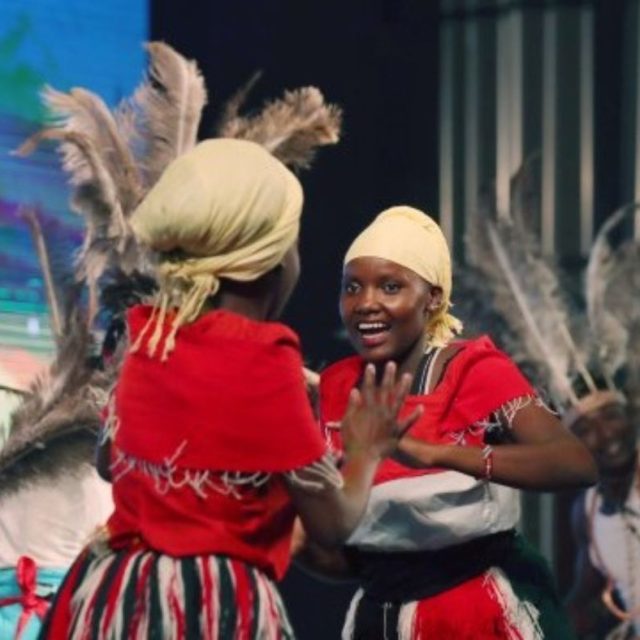
- [African Alternatives: The Future of Creative Cities](https://worldcitiescultureforum.com/wp-content/uploads/wp-mfa-exports/event/african-alternatives.md) — What will life look like in 2050 for a young person growing up in Africa now? How can culture address the challenges of rapid urbanisation and lead to sustainable development in people, place and planet?
- [African Alternatives: The Future of Creative Cities](https://worldcitiescultureforum.com/wp-content/uploads/wp-mfa-exports/publication/african-alternatives-the-future-of-creative-cities.md) — The 'African Alternatives: The Future of Creative Cities' Report shares analysis of the emerging themes and trends for cultural policy in Sub-Saharan Africa with insights from 11 African capitals. 
- [World Cities Culture Trends 2024](https://worldcitiescultureforum.com/wp-content/uploads/wp-mfa-exports/publication/world-cities-culture-trends-2024.md) — The World Cities Culture Trends 2024 Report highlights ten emerging trends in global cultural policy, showcasing how cities are using cultural solutions to tackle urban challenges.
- [In action: the Leadership Exchange Programme](https://worldcitiescultureforum.com/wp-content/uploads/wp-mfa-exports/publication/in-action-the-leadership-exchange-programme.md) — Since 2018, the World Cities Culture Forum Leadership Exchange Programme has been supporting cities to share innovative solutions to complex cultural policy challenges. Through a series of eleven exchanges the programme has funded cities to visit each other and gain in depth knowledge about different approaches shared issues, such as supporting affordable creative workspace, reconciling with indigenous communities and protecting culture at risk.
- [IN ACTION: THE LEADERSHIP EXCHANGE PROGRAMME](https://worldcitiescultureforum.com/wp-content/uploads/wp-mfa-exports/post/the-leadership-exchange-programme-in-action.md) — Since 2018, the World Cities Culture Forum Leadership Exchange Programme has been supporting cities to share innovative solutions to complex cultural policy challenges. Through a series of eleven exchanges the programme has funded cities to visit each other and gain in depth knowledge about different approaches shared issues, such as supporting affordable creative workspace, reconciling with indigenous communities and protecting culture at risk.
- [Why culture and the arts are crucial to the city recovery post-pandemic](https://worldcitiescultureforum.com/wp-content/uploads/wp-mfa-exports/post/why-culture-and-the-arts-are-crucial-to-the-uks-recovery-post-pandemic.md) — It would be easy to see culture as an optional extra in the midst of the vast challenges cities around the world are facing. But that would be a grave mistake.
- [Policies, prosperity and beyond: how Shenzhen is embedding culture into development planning](https://worldcitiescultureforum.com/wp-content/uploads/wp-mfa-exports/city-project/policies-for-the-development-of-cultural-industries.md) — In order to promote the high-quality
development of the creative industries, Shenzhen City and its districts have introduced a series of development plans and policies, with increasing policy funds.
- [Making space for arts and culture: Vancouver leads the way in arts ownership](https://worldcitiescultureforum.com/wp-content/uploads/wp-mfa-exports/city-project/expand-planning-tools-reduce-regulatory-barriers.md) — The purpose of the Community Amenity Contribution (CAC) policies is to prioritise the development of arts and culture spaces in city-building. The primary goal is to create more opportunities for community ownership, fostering a vibrant arts and culture scene within the city.
- [Shenzhen's green mission: protecting mangroves as a haven for biodiversity](https://worldcitiescultureforum.com/wp-content/uploads/wp-mfa-exports/city-project/guarding-the-mangrove-wetland.md) — The restoration of mangrove wetlands is an important part of Shenzhen's ecological protection policy. For many years, Shenzhen has carried out related protection and restoration work by implementing a characteristic protection system of "forest chief system", building a mangrove museum, and conducting mangrove science popularisation education activities.
- [Artists and activists: the beating heart of Chicago's 'Together We Heal' initiative](https://worldcitiescultureforum.com/wp-content/uploads/wp-mfa-exports/city-project/together-we-heal-creative-place-program.md) — In fall of 2020, the Office of Equity and Racial Justice (OERJ) launched Together We Heal, a journey toward
building racial healing and transformation through policy and culture change.
- [Montréal's hyperlocal cultural policy keeps an eye on the big picture](https://worldcitiescultureforum.com/wp-content/uploads/wp-mfa-exports/city-project/cultural-neighbourhoods.md)
- [Driving equity forward: Los Angeles County's cultural strategy](https://worldcitiescultureforum.com/wp-content/uploads/wp-mfa-exports/city-project/los-angeles-countywide-cultural-policy-2.md) — In 2017, Los Angeles County's Cultural Equity & Inclusion Initiative (CEII) issued a report with a set of recommendations to ensure that everyone in Los Angeles County has equitable access to arts and culture, and to embed the arts in policy and services.
- [The future of equitable funding: Arts Workforce Empowerment (AWE) as a model for change](https://worldcitiescultureforum.com/wp-content/uploads/wp-mfa-exports/city-project/arts-workforce-empowerment-awe-grant-programme.md) — The AWE grant programme provides targeted support for staff salaries at minority-defined DCA grantee organisations. AWE grants are targeted at organisations whose mission and programming serves a population specifically impacted by poverty, as well as other systemic discriminations, and are embedded in their community.
- [Why children's culture is being integrated with educational and social services in Helsinki's cultural development](https://worldcitiescultureforum.com/wp-content/uploads/wp-mfa-exports/city-project/helsinki-art-and-culture-in-helsinki-2030.md) — In August 2020, the City of Helsinki published its vision for art and culture – Art and Culture in Helsinki 2030.
- [Protecting the arts eco-system: how New York supported 3,000 artists during the pandemic](https://worldcitiescultureforum.com/wp-content/uploads/wp-mfa-exports/city-project/new-york-city-artists-corps.md)
- [San Francisco responds to demands for positive representation of indigenous communities](https://worldcitiescultureforum.com/wp-content/uploads/wp-mfa-exports/city-project/san-francisco-removal-of-early-days-from-pioneer-movement.md) — Over the past few decades, Indigenous communities have organised to demand for their rights for self-determination and positive representation. Increasingly, these cities have been working to address the issue, though the process is often complicated and highly polarised.
- [Art meets architecture: fusing Stockholm's cultural heritage](https://worldcitiescultureforum.com/wp-content/uploads/wp-mfa-exports/city-project/stockholm-cultural-heritage-in-urban-planning.md) — The City is continually working to embed cultural heritage as part of current and future development activity. The City’s Culture Department is the cities expert on cultural landscape and heritage and referral body in city planning projects.
- [How Dublin is shaping its civic soul through cultural engagement](https://worldcitiescultureforum.com/wp-content/uploads/wp-mfa-exports/city-project/culture-connects-dublins-community-created-outlets.md) — Making cultural offerings appealing and more accessible to residents to  ensure engagement and ongoing participation.
- [How a research centre in Buenos Aires is connecting technology and artists](https://worldcitiescultureforum.com/wp-content/uploads/wp-mfa-exports/city-project/latin-american-centre-for-experimental-hypermedia-chela.md) — Buenos Aires has created an innovative cultural infrastructure to support its multimedia and digital artists. 
- [Fuelling Edinburgh's artistic fire: how Edinburgh is meeting artist's needs](https://worldcitiescultureforum.com/wp-content/uploads/wp-mfa-exports/city-project/creating-edinburgh-performing-arts-development-epad.md) — Edinburgh's performers lacked a community network to enable them to share knowledge and support each other. A council funded programme is connecting the city's artists and helping them to fullfll their potential.
- [Chengdu's path to prosperity: making cultural financing accessible](https://worldcitiescultureforum.com/wp-content/uploads/wp-mfa-exports/city-project/innovative-cultural-financing-boost-to-both-economies.md) — An innovative capital fund created to support creative thinking in Chengdu's cultural and financial industries.
- [How Rio de Janeiro's 'Ações Locais' is dismantling barriers for marginalised producers](https://worldcitiescultureforum.com/wp-content/uploads/wp-mfa-exports/city-project/acoes-locais.md) — Unable to access mainstream funding, Rio de Janeiro's cultural producers needed support to redress this imbalance. A local programme is striving to overcome entrenched racial and cultural biases.
- [Dementia friendly London: a game-changer for vulnerable residents](https://worldcitiescultureforum.com/wp-content/uploads/wp-mfa-exports/city-project/dementia-friendly-venues-charter.md) — The Mayor of London and the Alzheimer's Society launched the FIRST Dementia Friendly London initiative. The goal is to make London the world's first dementia-friendly capital city.
- [Breaking down barriers: how the 'ACCESS' programme helps promote culture for all](https://worldcitiescultureforum.com/wp-content/uploads/wp-mfa-exports/city-project/access-culture-for-all.md) — This international collaboration included included Amsterdam, Dublin, Lisbon, London, Sofia, Riga, Tallinn, and Vilnius, this network  collaborated, to understand how to make cultural policymaking accessible for every citizen.
- [Why Amsterdam's night-time economy needs protecting and promoting](https://worldcitiescultureforum.com/wp-content/uploads/wp-mfa-exports/city-project/night-vision-the-night-has-the-future.md) — Amsterdam has always been renowned for its nightlife, from its underground scene to world famous nightclubs, parties and festivals. The night scene has also been a place where collaboration and new artforms have often evolved
- [Creative Recovery? The Role of Cultural Policy in Shaping Post-COVID Urban Futures 2022](https://worldcitiescultureforum.com/wp-content/uploads/wp-mfa-exports/publication/creative-recovery-the-role-of-cultural-policy-in-shaping-post-covid-urban-futures.md) — Since the outbreak of Covid-19, cities across the world continue to grapple with the pandemic’s devastating impact on culture and the creative industries. The pandemic exposed the precarious livelihoods of creative workers and the fragility of cultural institutions. But the crisis also revealed the unique power of art and culture too.
- [Five reasons why Africa is leading the creative revolution](https://worldcitiescultureforum.com/wp-content/uploads/wp-mfa-exports/post/5-reasons-why-africa-is-leading-the-creative-revolution.md) — Sub-Saharan African capitals are booming with creativity and bucking the trend on growing the creative economy. Dynamic leaders across capitals like Dakar, Johannesburg and Nairobi are leading a creative revolution. They are a fearless generation who aim to change the status quo on culture and creativity, in their cities and across the Africa continent.
- [INSIGHTS FROM HELSINKI: KING'S COLLEGE REFLECT ON ANNUAL SUMMIT](https://worldcitiescultureforum.com/wp-content/uploads/wp-mfa-exports/post/creative-recovery-project-with-kings-college-london.md) — Dr Jonathan Gross and Dr Lucy McFadzean from King’s College London reflect on World Cities Culture Forum Summit 2022 and our new research collaboration investigating the role of cultural policy in post-COVID urban futures.
- [LAUNCH: WORLD CITIES CULTURE REPORT 2022](https://worldcitiescultureforum.com/wp-content/uploads/wp-mfa-exports/post/world-cities-culture-forum-report-2022.md) — The World Cities Culture Forum launches the World Cities Culture Report 2022 – the most comprehensive account of culture in cities documenting over 200 pioneering initiatives from across 40 global cities in 6 continents.
- [Culture and Climate Change Report 2018](https://worldcitiescultureforum.com/wp-content/uploads/wp-mfa-exports/publication/culture-and-climate-change-report-2018.md) — As the effects of climate change generate an unprecedented call to action, discover how city leaders are putting climate change at the centre of cultural ambitions.
- [Cultural Capital Revealed: Unveiling Global Expenditure in World Cities](https://worldcitiescultureforum.com/wp-content/uploads/wp-mfa-exports/publication/world-cities-culture-finance-report-2017.md) — As large amounts of public and private money is spent on culture in our member cities, our report reveals how much is spent and where.
- [World Cities Culture Report 2014](https://worldcitiescultureforum.com/wp-content/uploads/wp-mfa-exports/publication/world-cities-culture-report-2014.md) — Cities are leading economic growth across the world. Urbanisation will be one of the defining stories of this century, a driver of international growth and central to the recovery of the global and national economies.