
How Taipei is reviving a heritage settlement with co-habitation between artists and residents
Project: Integrating artists, new residents and long-time inhabitants of Treasure Hill into living guardians

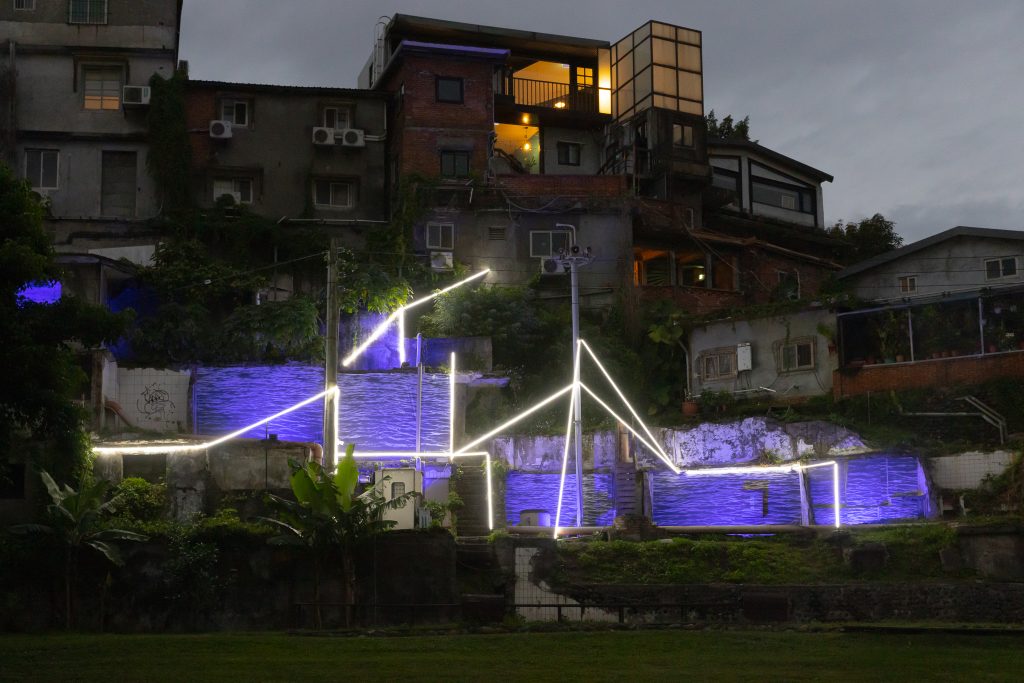
In 2021, the Taipei City Department of Cultural Affairs adopted new regulations to attract artists and cultural workers to revive the historical Treasure Hill neighbourhood. Through this model, new residents take on community responsibilities such as guided tours and neighbourhood patrols, while engaging in projects that highlight environmental sustainability and heritage preservation. International artists-in-residence are encouraged to share meals, participate in local meetings, and collaborate with residents on creative initiatives. These exchanges transform Treasure Hill into a living, sustainable settlement where art and daily life are intertwined.
Living preservation in a historical settlement
Nestled on the southern slopes of Xiaoguanyin Mountain near the Xindian River, Treasure Hill in Taipei has long reflected Taiwan’s layered history. Originally a religious hub built around Treasure Hill Temple, the site later became a Japanese water facility in 1895, before evolving into an informal settlement after 1949 as veterans and rural migrants constructed makeshift hillside dwellings. By the 1980s, nearly 200 households had created a dense, self-built community that faced imminent demolition. Civil society and academics mobilized to protect the settlement’s unique heritage.
In 1997, Treasure Hill Temple was designated a municipal heritage site, followed in 2004 by recognition of the surrounding settlement as historic buildings. The Taipei City Government committed to a strategy of ‘living preservation’, combining heritage protection with revitalisation. This approach culminated in the launch of the Treasure Hill Artist Village in 2010, which introduced artistic interventions to support both preservation and community life.

Preserving community while facing decline
At its height, Treasure Hill was home to hundreds of families. But as military housing disappeared and residents relocated, population decline became a pressing issue. To protect vulnerable residents, the city created the Treasure Hill Housing Project, reserving 30–40 low-rent units for elderly residents and low-income households. But by 2010, only 21 original households remained.
Over the past decade, an aging population has steadily reduced the number of long-term residents. Without new community members, the settlement risked losing both its scale and vitality. At the same time, integrating an artist community into a residential environment raised challenges: balancing cultural exhibitions and performances with privacy, and creating a shared sense of belonging between residents and artists.
A new model of coexistence
In 2021, the Taipei City Department of Cultural Affairs adopted new regulations for the use of Treasure Hill’s public properties, shifting from relocation-based rentals to a community contribution program. Applicants for residency now propose projects that integrate settlement preservation with art and community life, choosing from four key areas: artistic practice and events, community building, environmental education, and social services.
The integration of artists, new residents, and long-time inhabitants has fostered mutual respect and collaboration, turning Treasure Hill into a model for preservation and reuse. This dynamic ecosystem demonstrates how creative workspaces, cultural heritage, and community engagement can coexist, ensuring that historic settlements remain vibrant, inclusive, and sustainable in the face of urban transformation.