How the Chicago Monuments Project is reimagining public memory through equity and art
PROJECT: Commissioning new inclusive and diverse public monuments to support civic healing
The Chicago Monuments Project (CMP), launched in 2020, confronts racial and cultural inequities in the city’s memorial landscape. Its mission is to reshape how Chicago remembers its past by elevating stories historically excluded from public commemoration – particularly those of Native peoples, Black communities, and women. Rather than focusing solely on removing controversial statues, CMP seeks to tell fuller, more inclusive stories through new public artworks that reflect the city’s diversity and support civic healing.
A response to national reckoning and public pressure
The project emerged amid national movements for racial justice and widespread calls to reconsider who is honoured in public spaces. Chicago’s more than 500 monuments have long centred colonial, military, and white male figures, leaving narratives of resistance, migration, and community-building largely invisible.
At the same time, the project faced significant challenges. It had to navigate contentious debates over figures such as Christopher Columbus, manage the complexities of reviewing and potentially altering historic art, and ensure authentic community participation in decision-making. CMP therefore became both a cultural and civic experiment in how cities might engage the public in shaping a more equitable visual landscape.
A collaborative city-led initiative
CMP operates as a cross-departmental collaboration among the Chicago Department of Cultural Affairs and Special Events (DCASE), the Chicago Park District, and Chicago Public Schools, guided by an advisory committee of artists, scholars, curators, and community leaders. This coalition began with a comprehensive review of existing monuments, identifying 41 works for further evaluation or action.
The process combined research, public dialogue, and policy innovation to ensure transparency and community accountability. It demonstrated how local governments can integrate cultural equity into heritage management and public art policy.
Investing in new narratives and public art
In 2023, DCASE secured $6.8 million from the Mellon Foundation to commission eight new public artworks and fund conservation and interpretation of existing monuments. These projects represent a citywide effort to redress historical imbalance through creative expression.
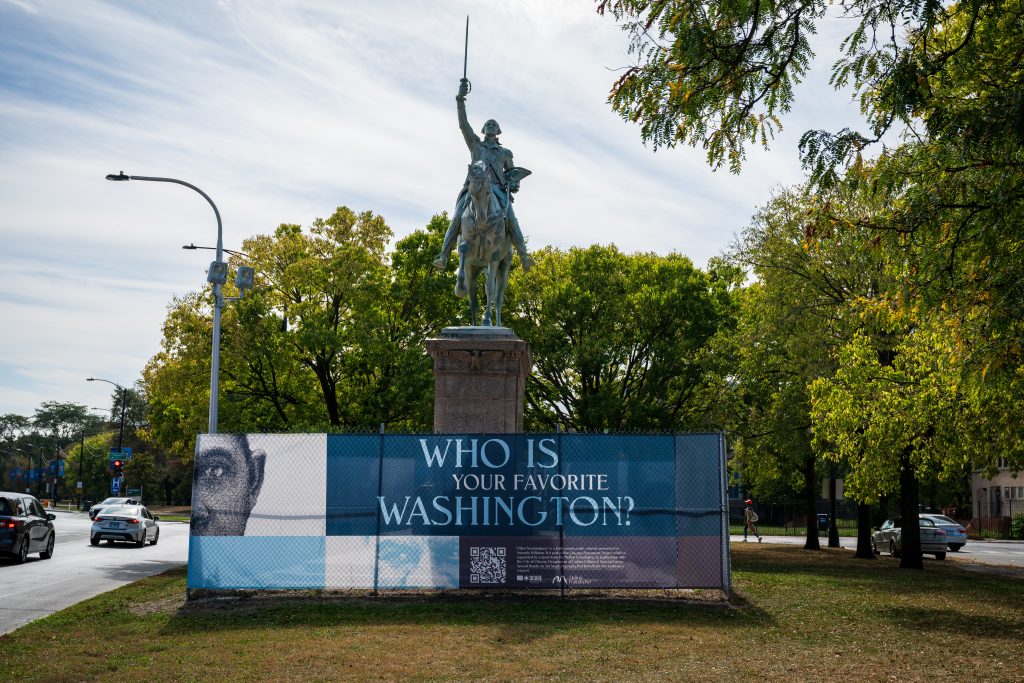
Among the forthcoming works are a memorial to victims of police torture, a monument honouring gospel singer and civil rights activist Mahalia Jackson, and an artistic intervention at the George Washington Monument by Amanda Williams. Other commissions highlight Latina/x histories in Pilsen, the 1919 Chicago Race Riot, and labour leader Mother Jones, ensuring that diverse Chicago stories are permanently inscribed into the city’s visual landscape. Public engagement remains central throughout the development of these projects, which will continue to be installed across Chicago through 2027.
The Chicago Monuments Project illustrates how a city can move beyond debates over removal toward a transformative cultural policy that prioritises representation, truth-telling, and community involvement. It sets a precedent for how cities worldwide can reimagine commemoration to reflect contemporary values of equity, inclusion, and shared civic identity.