Cultural Policy in Los Angeles
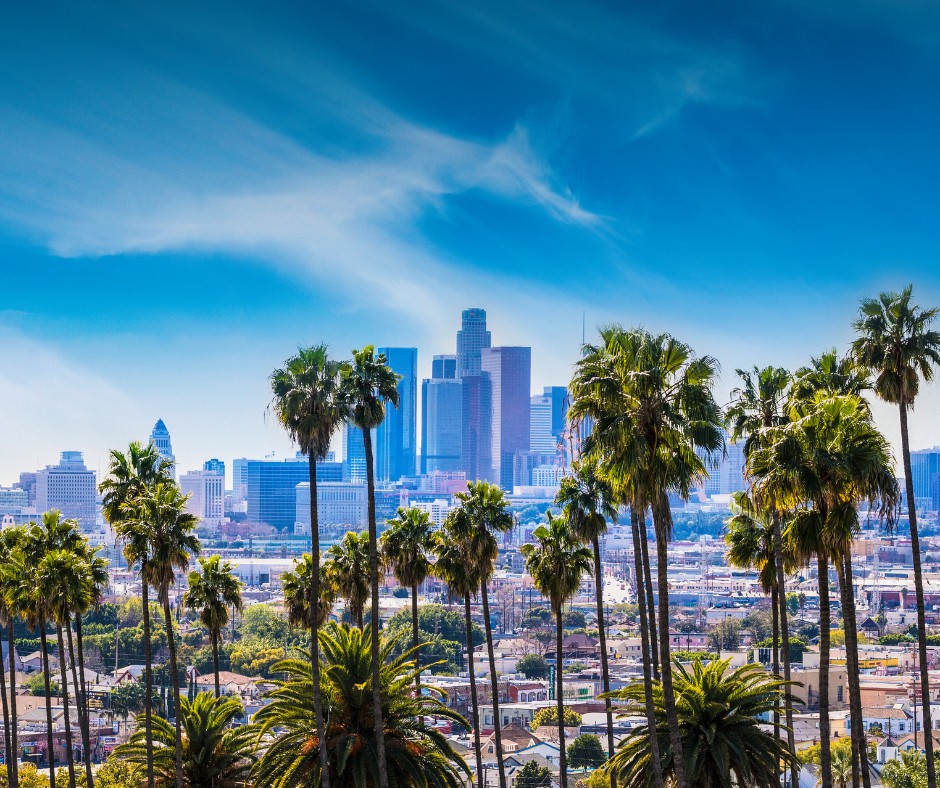
The City of Los Angeles spans over 500 square miles, and is part of the broader Los Angeles County, which encompasses 88 incorporated cities with nearly 10 million residents
Cultural policy
The government of the City of Los Angeles is led by a Mayor in collaboration with 15 City Council Members. The County of Los Angeles is governed by a five-member Board of Supervisors, each holding the legal status of Mayor in their respective districts, and collectively overseeing the County’s jurisdiction.
Cultural policy is led by the Los Angeles City Department of Cultural Affairs and the Los Angeles County Department of Arts and Culture for their respective jurisdictions, prioritising access, equity, and inclusion. Each maintains core programs and resources for the arts and culture sector, such as grants for nonprofit arts organizations, arts education initiatives, and public art. Several cities within the region also have cultural offices or departments, which Los Angeles County convenes to share best practices and topical issues in public arts policy. Long known as a “creative capital,” Los Angeles has a robust arts and creative ecosystem while leading innovative responses to current civic issues, from climate and disaster response to youth and mental health. Programmes like LA County’s artist residencies in government departments and agencies and public-private initiatives LA County Arts Education Collective, LA Arts Recovery Fund, and FireAid support exemplify this. Amid challenges around affordability and recovery, Los Angeles is shaping a more inclusive, community-driven cultural future.
Los Angeles faces a multitude of civic challenges, including climate and environmental sustainability, commercial development leading to displacement, housing issues, neighbourhoods lacking shade trees in high-heat areas, transportation planning, and water resource management. Many of these challenges revolve around affordability and sustainability concerns.
Los Angeles’ cultural industries are confronting their own distinct set of challenges. Following a reckoning on issues of race and equity ignited by the tragic killing of George Floyd, there is a growing determination to address historic patterns of inequity in Los Angeles, particularly within the arts sector. The property and affordability crises have also directly impacted the cultural sphere, limiting access to exhibition, studio, and performance spaces. Furthermore, the ongoing trend of converting light industrial and warehouse spaces — vital components of Los Angeles’ cultural infrastructure — into upscale residential developments instead of functional studios for independent artists and working-class families further exacerbates the shortage of affordable living and workspace.
Cultural programmes
Los Angeles County boasts a vibrant cultural ecosystem, comprising over 3,499 nonprofit arts organisations and a thriving community of more than 150,000 working artists. Notably, Los Angeles hosts more working artists than any other major metropolitan area in the United States. This creative economy plays a pivotal role in driving the region’s prosperity, contributing over $164 billion in gross value to the local economy and fuelling $95.1 billion in labour income. Impressively, the creative economy accounts for more than 21% of all jobs in Los Angeles County.
Both the Department of Cultural Affairs (DCA) and the Los Angeles County Department of Arts and Culture (LADAC) share a common focus on access, diversity, equity, and inclusion, intensifying their efforts to reach underserved residents. This commitment includes initiatives such as DCA’s artist-in-residence grants, which place teaching artists within social justice organisations, as well as recent programmes like the Arts Workforce Empowerment Grant (AWE). LADAC, on the other hand, advances the cause through its Cultural Equity and Inclusion Initiative (CEII) and the development of a Countywide Cultural Policy, all of which are geared towards achieving region-wide goals and fostering inclusive cultural programmes.

Cultural heritage and infrastructure
Los Angeles is celebrated as the entertainment industry capital of the United States and is increasingly recognised as a creative hub for art and culture. It stands out as one of the largest and most culturally diverse regions in the Americas. The Los Angeles county region at large is nearly 10 million people and 4,000 square miles. It is geographically diverse, with densely populated urban centres, deserts, valleys, and coastal communities. It is culturally diverse, with over 200 languages spoken, communities practicing arts and cultural forms from all over the world. The city’s population is nearly half Latino and is a majority people of colour—ahead of the coming trend for the rest of the U.S.
Los Angeles’ remarkable size and diversity are key cultural assets. The city is home to beloved and popular ethnic enclaves and neighbourhoods including Boyle Heights, Chinatown, Echo Park, Historic Filipinotown, Koreatown, Leimert Park, Little Armenia, Little Tokyo, Pacoima, San Pedro, Thai Town, Venice, Watts, and areas like West LA/Westwood with its large Persian community.
Beyond its globally recognised leadership in film, television, and music production, Los Angeles city and region has a dynamic nonprofit cultural sector, rich artistic legacy, and international influence. It boasts major venues like the Los Angeles County-owned Hollywood Bowl, Los Angeles County Museum of Art (LACMA), Walt Disney Concert Hall, Natural History Museum, and Music Centre, and cultural institutions such as The Getty, Broad Museum, Autry Museum of the American West, and Museum of Contemporary Art. These larger institutions are a part of a wide-ranging arts ecosystem of diverse deeply rooted community-based organisations and ethnic arts hubs across neighbourhoods such as Leimert Park, Koreatown, and Boyle Heights rooted in Black, Latino, Asian, and Indigenous arts and culture. These include the Japanese American National Museum, Self-Help Art and Graphics, California African American Museum, and East West Players, and organisations with deep ties to, or led by, artists, and grassroots arts activities.
Los Angeles County’s cultural ecosystem includes more than 3,499 nonprofit arts organisations and more than 150,000 working artists. Los Angeles has more working artists than any other major metropolitan area in the United States. The creative economy is a significant driver of the region’s economy adding more than $164 billion in gross value to the local economy and $95.1billion to labour income. The creative economy generates more than 21% of all jobs in Los Angeles County.
Community engagement, social impact and policy innovation
Both the DCA and LADAC remain steadfast in their commitment to advancing access, diversity, equity, and inclusion, intensifying their efforts to serve marginalised communities. DCA, for instance, has established artist-in-residence grants aimed at embedding teaching artists within social justice organisations. Additionally, they have initiated the Arts Workforce Empowerment Grant (AWE) Program. LADAC, on the other hand, has launched the Cultural Equity and Inclusion Initiative (CEII) and developed a Countywide Cultural Policy, both of which are geared toward advancing region-wide objectives and programmes. These concerted efforts underscore the agencies’ unwavering dedication to ensuring that cultural opportunities are accessible to all.
© Images Courtesy of Getty/Canva