Bruce Lee’s former residence and the cultural revival of Yongqingfang district in Guangzhou
Project: embracing urban development model ‘Build-Operate-Transfer’ to protect heritage

The Purpose
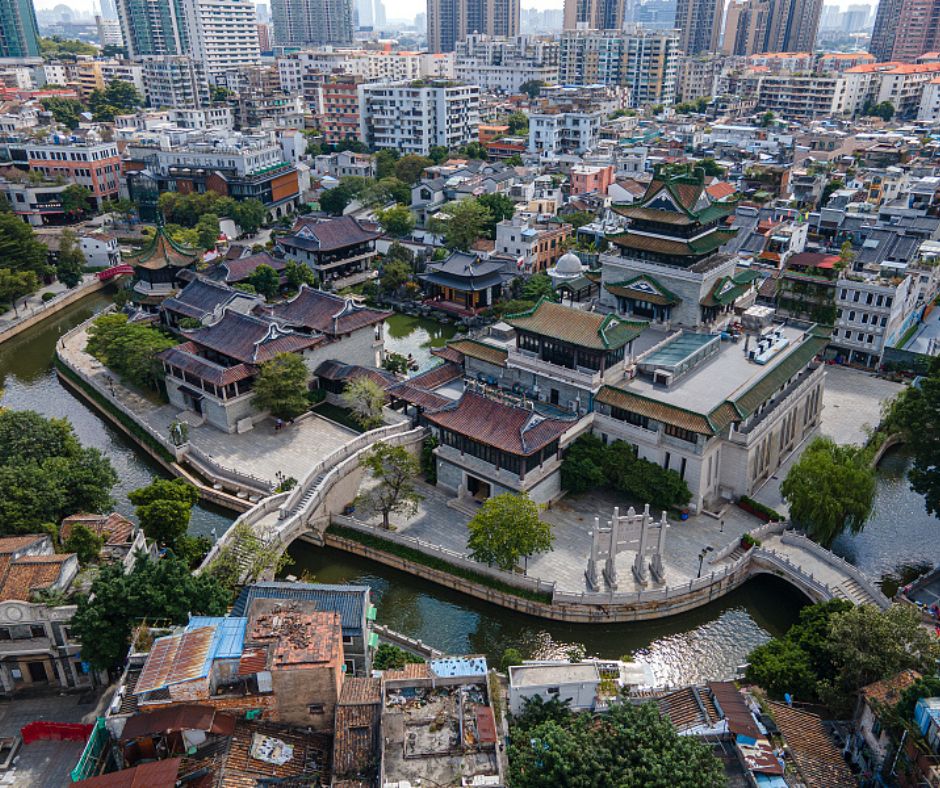
The Yongqingfang neighbourhood is home to numerous cultural heritage sites, including the former residences of actor Bruce Lee and engineer Zhan Tianyou, as well as landmark buildings such as Jinsheng Cinema, Bahe Clubhouse, and Luanxing Hall. Nevertheless, due to ageing infrastructure and buildings, residents were relocating. Consequently, the district had a relatively high vacancy rate, with only 40% of the houses being occupied as homes, 7% serving as shops and warehouses, and 33% standing vacant. This resulted in deteriorating buildings, frequent fire hazards and a failure to meet basic modern living standards, including transportation and safety.
The Challenge
To restore a heritage district and enhance the modern living experience for its residents. The Yongqingfang district boasts a wealth of both tangible and intangible heritage. However, it was deteriorating, and residents endured a declining quality of life. The Guangzhou government, in collaboration with residents, implemented a public-private partnership model to support cost-effective micro-renovations aimed at preserving historical buildings and enhancing the local living conditions.
The majority of buildings underwent partial restoration, with only four (5% of total renovations) being demolished and reconstructed.
The Solution
To halt this decline, the Guangzhou government embraced an urban development model characterised as ‘Government-led, business-executed and community-engaged.’ This model aimed to establish a shared interest community centred around property rights, offering a win-win situation for all parties involved. It is commonly known as BOT, or ‘Build-Operate-Transfer.’ The Vanke Group, one of China’s largest developers, assumed responsibility for the renovation, construction and operation.
The government will reassume ownership at the end of the operational period in 2031. Until then, residents can provide input on the renovation and management of Yongqingfang.
In 2018, a roundtable discussion established a forum for renovating the Enning Road area, of which Yongqingfang is a part. The overarching ‘Co-development Committee of Enning Road Historical and Cultural Neighbourhood’ comprises 25 members and is led by the government. Among them, 12 represent the residents, while the others include expert advisors and representatives from the media, as well as tenants.
The Impact
The resulting renovation yielded several positive outcomes. The cultural and historical buildings of Yongqingfang were preserved with minimal loss. The majority of buildings underwent partial restoration, with only four (5% of total renovations) being demolished and reconstructed. Furthermore, new culturally oriented activities were introduced to the neighbourhood, encompassing cafes, theatre performances, and cultural and creative shops.
Many of these cultural sites are located within the historical buildings, allowing people to enjoy Cantonese opera, Cantonese embroidery, and other intangible cultural heritage. For instance, Bruce Lee’s former residence was not only structurally restored but now serves as a versatile exhibition space.
Source: World Cities Culture Report 2022
Image Courtesy © Getty/Canva