
Art Everywhere: Cologne’s advertising pillars turned into open-air art museum
Project: Turning outdated infrastructure into accessible exhibition platforms
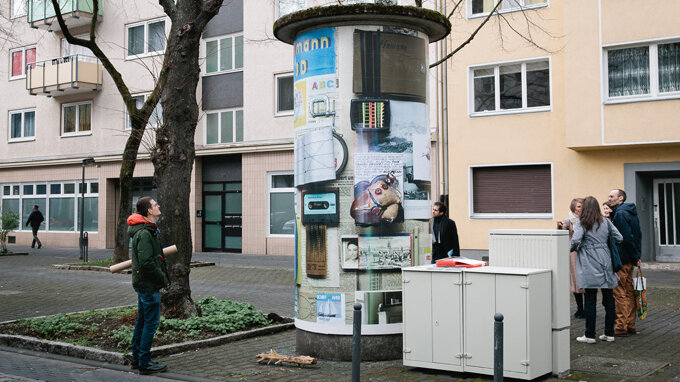
By 2019, the City of Cologne faced a dual challenge: how to remove outdated advertising pillars – once symbols of modern urban life – and how to meet growing demand for accessible art in public space. Traditional advertising had shifted to digital formats, leaving more than 200 cylindrical pillars scattered across the city with little purpose. Meanwhile, the city lacked affordable, visible venues for exhibitions and public engagement.
Citizens, particularly those often excluded from formal cultural settings due to financial or geographic barriers, expressed strong interest in a more inclusive culture. In response, Cologne’s cultural department identified a unique opportunity to align urban infrastructure reuse with its city cultural policy goals.
A creative response through collaboration
The breakthrough came by merging two pressing urban needs into one cultural solution. Rather than demolish the pillars, Cologne chose to repurpose a portion of them as permanent platforms for public art. After three and a half years of trial projects and careful negotiation with stakeholders – including Ströer (the media company managing outdoor advertising) and the city’s utility company – the initiative Kunst an Kölner Litfaßsäulen launched officially in March 2019.
Today, 27 advertising pillars – 25 saved from demolition, with two added in 2024 – make up Cologne’s growing network of Art Pillars. With secure long-term funding for artist fees, printing, and installation, the model is now embedded in city operations. Cologne is the first city in Germany to systematise the reuse of advertising pillars in this way, setting a precedent for other municipalities interested in linking cultural programming to sustainable infrastructure strategies.
In partnership with the Academy of Media Arts Cologne (KHM), the annual programme commissions contemporary artists to create rotating works specifically for the pillars. These art installations appear across neighbourhoods, providing accessible, everyday encounters with visual culture.
Embedding culture into public space
The project’s success lies in its ability to merge artistic value with functional urban planning. Citizens are no longer passive consumers of urban infrastructure – they actively engage with it. The pillars spark conversation about what art means in public, who public space belongs to, and how cities can reflect and serve diverse communities. The initiative functions as an open-air museum, dissolving traditional access barriers and embedding culture into daily life.
More than a visual intervention, the campaign signals a broader policy direction for Cologne: integrating art into the urban fabric as part of long-term urban regeneration and cultural planning strategies. It also reinforces the role of culture in promoting quality of life and civic identity.
The case of Cologne’s Art Pillars exemplifies how adaptive reuse can meet both cultural and urban challenges while advancing broader goals of cultural participation, inclusive culture, and place-based innovation.