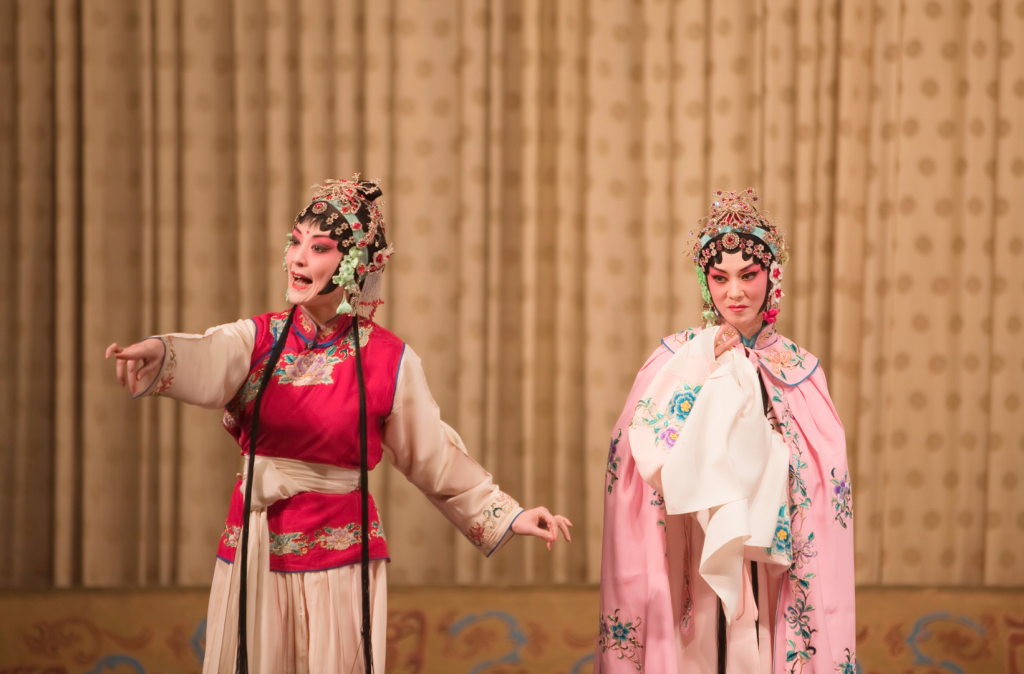
Beijing seeks to become a “Capital of Performing Arts” by developing new cultural infrastructure such as performing arts clusters in areas such as Wangfujing, Tianqiao, Qianmen, and the Sanlitun-Liangma River International Cultural Performing Arts Zone, with the total number of recognized new performing arts spaces in the city reaching 100.
The three flagship cultural facilities in Beijing’s Sub-Center—Beijing Art Center, Beijing Library, and Beijing-Hangzhou Grand Canal Museum—recently opened to the public. Additionally, the Beijing Art Museum is under construction and is scheduled to open in 2028.
Advance urban park construction: Build 20 boundary-less parks, carry out all-age friendly renovations at 10 park locations, create 30 new pocket parks and small green spaces, and establish 50 community micro-gardens.
The city’s first municipal public Intangible Cultural Heritage experience center was recently established in a traditional Beijing Siheyuan (traditional courtyard). Since its opening in February 2024, the centre has hosted 123 themed activities, including exhibitions, interactive experiences and other special events. These activities have been timed around traditional festivals, memorial days, and major events, with open days for schools and the wider community.
World-class new infrastructure: Beijing is constructing a high-speed optical network to create a “Gigabit City”. A special “signal upgrade” will achieve in-depth 5G mobile network coverage across the city.
Related City Projects
Key facts
Beijing is the capital of China and serves as the nation’s political and cultural centre, a hub for international exchanges, and a driver of national innovation. It is also a historic and vibrant, modern metropolis.
The world’s only “dual-Olympic city”, having hosted both the Summer and Winter Olympic Games, Beijing is using Olympic legacies to boost its sport industries and build a renowned sports city.
Beijing boasts eight World Heritage Sites, including the Great Wall, the Forbidden City, the Zhoukoudian Peking Man Site, the Summer Palace, the Temple of Heaven, the Ming Tombs, the Grand Canal, and the Beijing Central Axis. It ranks among the cities with the highest number of World Heritage Sites globally.
Beijing is home to 144 national and 303 municipal intangible cultural heritage projects. Thirteen are on UNESCO’s Representative List of the Intangible Cultural Heritage of Humanity, the most in China.
In 2024, the city was the site of 57,000 commercial performances and 202 large-scale performance events. The city also hosted over 16,000 cultural events with a focus on boosting public participation and enhancing both the quality and quantity of grassroots cultural activities.