Urban Renewal: Beijing’s cultural strategy transformed former industrial site into thriving Shougang Park
Project: Embracing industrial heritage and Winter Olympics to develop an urban heritage park and night time economy
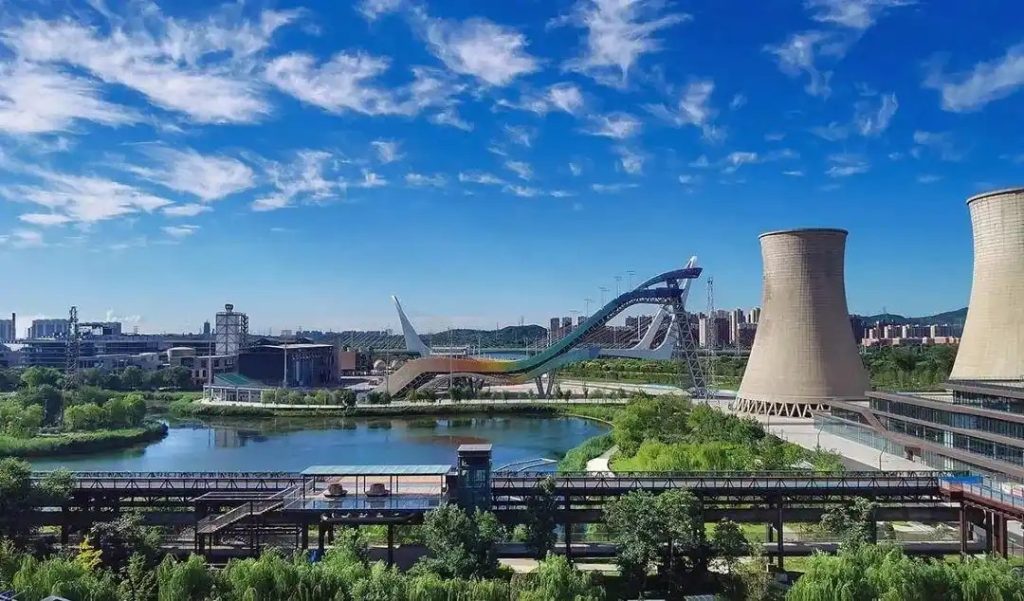
On the outskirts of the capital, Beijing’s cultural strategy has transformed a vast 863 hectares steel production site into a unique visitor destination, positioning Shougang Park as a model for urban development, and industrial heritage revitalisation. By capitalising on the 2022 Winter Olympics, Beijing repurposed Shougang Park’s industrial structures – like blast furnaces and cooling towers – into thriving ecological, cultural and recreational spaces that have boosted tourism and the night time economy.
Using major events to catalyse park functionality and image
Transforming Shougang Park presented complex challenges due to its unique location, vast scale, and historical significance. Not just a shift in industrial development, its revitalisation marked a functional renaissance for a key urban area in the capital, requiring a comprehensive and integrated approach.
Major events – notably the 2021 Special Exhibition of the China International Fair for Trade in Services (CIFTIS) and the 2022 Winter Olympics – served as catalysts to enhance functionality and image and accelerate the park’s transformation.
Two coal workshops, with an area of 25,000m2, were transformed into short Olympic track speed skating, figure skating, curling and ice hockey venues. And the freestyle skiing and snowboarding events on the new Big Air Shougang jump saw two Chinese athletes win gold medals. The ramp, and other venues developed for the Olympics, are now new iconic structures and venues in the park.
Shougang Park’s renovation aligns with efforts to enhance Beijing’s core functions and relieve it of functions non-essential to its role as China’s capital.
Prioritising green and low-carbon development with environmental governance
Beijing’s cultural policy approach focused on environmental, holistic and organic renewal through coordinated planning. Originally established in 1919 as a steel mill, the site ceased operations in 2005 to reduce pollution in the capital. Repurposing many of the parks’ industrial structures – including blast furnaces, cooling towers, warehouses, power plants and mills – into cultural and recreational venues has allowed low-carbon development.
Rich in industrial relics that symbolise China’s steel industry, Shougang Park serves as a microcosm of modern industrial progress. By repurposing old industrial spaces while preserving their heritage, Shougang Park is a strong examplefor other world cities keen to revitalise industrial areas.
In 2016, the park was recognised by C40 – a global network of mayors taking urgent action to address climate change – as an ambitious climate positive, low-carbon project.
Establishing a new MICE and visitor destination while boosting the night time economy
While some structures on the site have become heritage visitor attractions – such as the 164 metre Big Air Olympic ramp– others have been redeveloped into multipurpose venues. No 3 Blast Furnace is now a MICE (Meetings, Incentives, Conferences, and Exhibitions) venue, which has hosted hundreds of events such as China Science Fiction Conference, Mercedes-Benz Auto Press Conference, Beijing Fashion Week.
Other parts of the site have been redeveloped as exhibition and event venues, which include a sci-fi theme park, bars, restaurants and the Shangri-La luxury hotel. This has spurred night time tourism. After-dark tours and seasonal events such as the Spring Festival Garden Party have cemented Shougang Park as a safe, vibrant night time entertainment destination.